

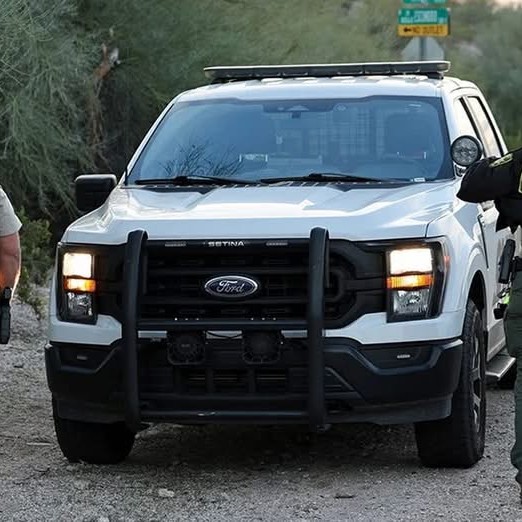
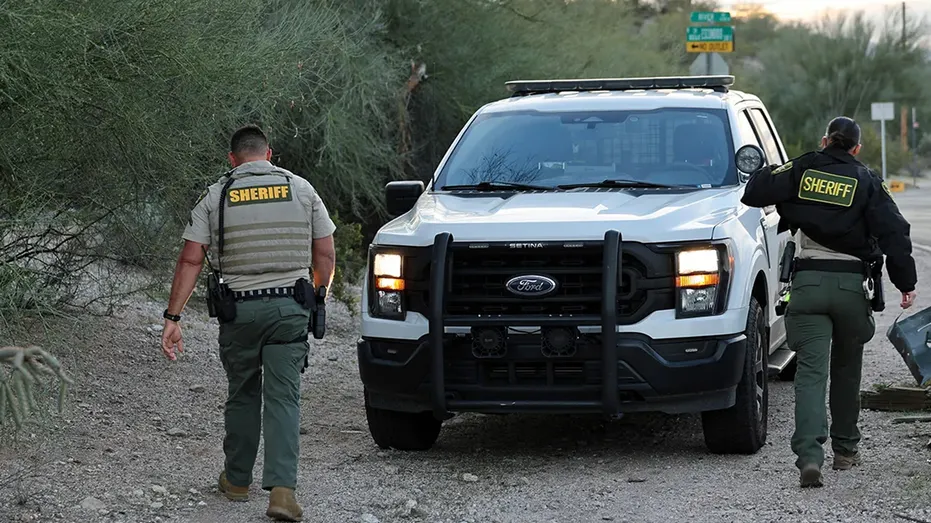
The same desert roads where cameras now trail Pima County deputies for a prime-time series are the roads those deputies still search for a missing 84-year-old woman whose name never appears in the show’s opening credits.
TLDR
A reality series tracks Pima County deputies during the still-unsolved disappearance of 84-year-old Nancy Guthrie, exposing unresolved evidence and lingering questions.
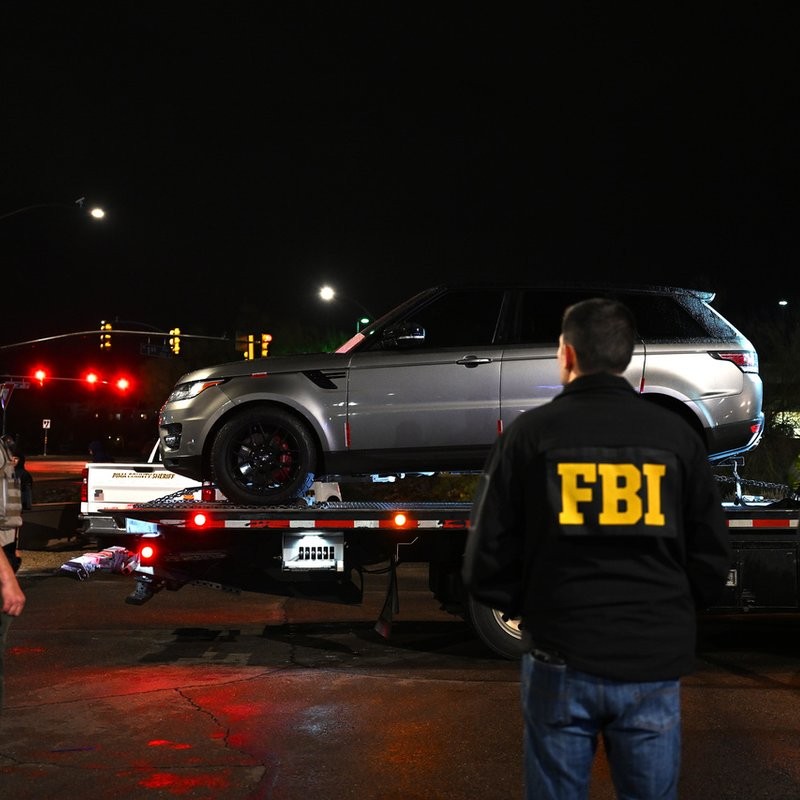
Nancy Guthrie vanished from her Tucson home in the early hours of February 1st, with investigators treating her disappearance as an apparent kidnapping. The case sits at the center of a sprawling search that now involves federal agents, advanced surveillance equipment from her home, and a cheap plastic gun holster that may have passed through a big-box checkout line before becoming the investigation’s most public clue.
Cameras on Deputies, Silence at the House
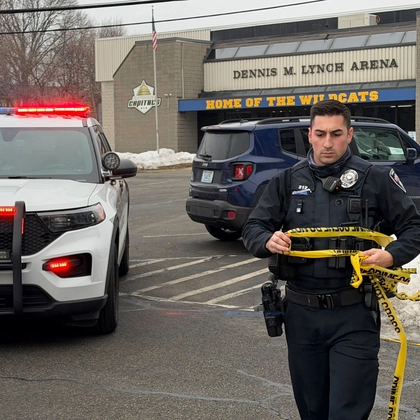
Months before a stranger entered or approached Guthrie’s home, another set of cameras arrived in Pima County. A 10-episode limited series embedded with the sheriff’s department, filming through the spring and summer of 2025, riding along with patrol deputies, night detectives, and the DUI unit.
The series, titled Desert Law, launched in early January. It promised what its marketing materials called elite access into one of the nation’s largest sheriff’s departments. Viewers follow traffic stops, bar fights, and tense searches in the scrubland outside Tucson, cut together with the kind of gritty music and quick edits that turn routine reports into episodic drama.
Pima County Sheriff’s office at center of Nancy Guthrie case spotlighted on new TV show ‘Desert Law’ https://t.co/4F5O9sUMBf pic.twitter.com/6V6HwN0rbA
— New York Post (@nypost) February 19, 2026
Sheriff Chris Nanos worked behind the scenes to coordinate filming with his deputies, even as he stayed off camera. By the time the most recent episode, Weapons Found, aired, the real-life case consuming his department was not an illegal firearm in a supermarket aisle. It was the disappearance of an elderly woman from a residential street.
In that episode, deputies respond to a pistol pulled during a supermarket fight, then to a suspected armed home invasion. The footage reinforces the show’s framing of the county as a place where firearms are ever-present, and where deputies move through a landscape described on screen as governed by some of the loosest gun laws in the country.
What viewers do not see is the house where Nancy Guthrie was last known to be safe, or the gap between the show’s curated access and the sealed silence around its highest-stakes investigation.
A Vanishing on a Quiet Street
Guthrie lived in Tucson, in a home where family visits and ordinary routines had played out for years. Sometime in the early hours of February 1st, that routine broke. By the time daylight returned, she was gone.
There were no public reports of a long struggle echoing through the neighborhood, no widely reported 911 call from inside the home, no immediate, obvious explanation for why an 84-year-old woman would leave her house in the dark without her family. From the outset, the case was treated not as a voluntary disappearance but as an apparent abduction.
Guthrie is the mother of a nationally known morning show co-host, which pushed the case into the national spotlight almost immediately. That attention brought more cameras to Tucson, but not the kind embedded with patrol units for entertainment. News crews framed the same streets and desert washes now seen each week in the reality series, only with a different question in mind.
Who was confident enough to walk into or up to the home of a high-profile family’s matriarch and vanish with her before dawn?
Evidence That Raises More Questions
Investigators found that Guthrie’s home was not a soft target. Advanced video equipment watched over the property, a level of surveillance beyond a simple motion-activated doorbell. Cameras, recording hardware, and related systems existed to capture what happened at the edges of her world.
Yet months into the search, there is no public arrest, no widely released suspect image, and no dramatic still frame from that equipment identifying who approached the house that night. The technology, designed to reduce uncertainty, has instead become one more unanswered question. Did it capture usable images? Did the person who took Guthrie understand where the blind spots were?
Another piece of the puzzle surfaced far from the quiet street. A simple, $10 gun holster sold at a discount retailer became a focal point of coverage. Investigators linked that model of holster to the case, describing it as a potential key to identifying the suspect. In a landscape where firearms and their accessories change hands casually, the idea that a cheap holster could narrow the field faced long odds.
At the same time, one floated explanation for the disappearance, a burglary gone wrong, collided with the realities of how such crimes usually unfold. Public analysis described that scenario as extremely rare given the available facts. An elderly woman taken without a public trail of stolen electronics or cash, without the usual markers of an opportunistic break-in, sits uneasily next to claims that this was simply a botched theft.
Even the label of kidnapping carries unspoken questions. If a ransom was ever demanded, it has not been publicly revealed. If the abductor’s motive was something else, that motive remains out of sight.
Family Cleared, Focus Shifts Outward
Scrutiny first settled where it usually does, on the people closest to the victim. In this case, family members were formally cleared as suspects. For a household connected to national television, that clearing happened under a brighter glare than most families ever face.
With the focus shifted outward, the investigation widened to include federal support. Teams fanned out through desert areas around Tucson, working against a clock that grows louder with every day that passes without a solid lead.
From afar, most people now know the case through the face and voice of Guthrie’s daughter. In an emotional video posted to social media, she looked into the camera and spoke directly to whoever might have her mother.
“I just wanted to come on and say that we still have hope, and we still believe,” she said. “And I wanted to say to whoever has her or knows where she is. It is never too late to do the right thing. And you are not lost or alone.”
Her words carried another kind of pressure. They acknowledged the possibility that the person responsible for the disappearance is still watching, still deciding what to do next.
Reality Show in the Middle of a Manhunt
Parallel to that plea, Desert Law rolled out its episodes. Each week, viewers watch deputies clear houses, recover weapons, and comfort shaken residents. The cameras move with them into dim hallways and along unpaved roads, capturing tense moments that resolve neatly by the final commercial break.
Outside the frame, the same department continues a case that resists tidy narrative arcs. There is no bodycam clip of an arrest to slot into the third act, no grainy surveillance photo to splash across an opening montage.
The juxtaposition is stark. On one screen, the department appears as a finely tuned machine, responding quickly and decisively as crises erupt and subside. In the real investigation, progress is measured in small, private steps that rarely translate into gripping television.
The series raises difficult questions with no easy answers. Does a camera crew shadowing deputies change how they move, what they prioritize, or how willing they are to open up about an ongoing case? Does the presence of a nationally broadcast show create pressure to project control and confidence while a high-profile investigation remains unresolved?
None of those doubts appear in the edited episodes. They exist instead in the spaces between what the show depicts and what the public still does not know about the search for Nancy Guthrie.
Unanswered Steps in the Timeline
The bare facts of the disappearance leave wide stretches of unlit ground. The exact moment when Guthrie was last seen inside her home has not been publicly pinned to a specific time. The path a suspect might have taken to reach the house, and then leave with her undetected, has not been mapped in public detail.
It remains unclear whether anyone heard an unfamiliar vehicle in the early hours before dawn, or whether neighborhood cameras beyond Guthrie’s property captured a person or car that did not belong. The advanced surveillance system at the home, the cheap holster, and the rare-burglary theory sit like disconnected islands in a sea of missing information.
Meanwhile, the desert around Tucson stretches out, a place where evidence can disappear quickly and where search teams must choose their ground carefully. Each decision about where to deploy people and time is shaped by information the public does not see.
On television, the county appears shrunk to the radius of a patrol car’s headlights. In reality, the search grid for one missing woman spans neighborhoods, highways, and washes that swallow footprints after a single storm.
As new episodes of Desert Law continue to air, the investigation into Nancy Guthrie’s disappearance continues off-screen. The show’s season has an end date. The question of what happened before dawn on February 1st does not.