


The man who once lived down the hall kept the same secret for three decades: 61 stab wounds, a naked body on a bedroom floor, and a father walking into a room he never should have seen. The secret held through moves, new jobs, and an ordinary life in another state, until a strand of DNA finally closed the distance between that apartment door and a courtroom.
TLDR
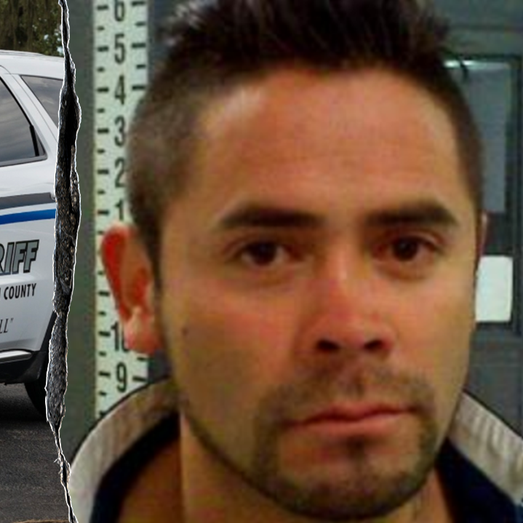
In Indianapolis, 53-year-old former neighbor Dana Jermaine Shepherd received a 45-year sentence for the 1993 murder of 19-year-old Carmen Van Huss, after a 2023 DNA match.
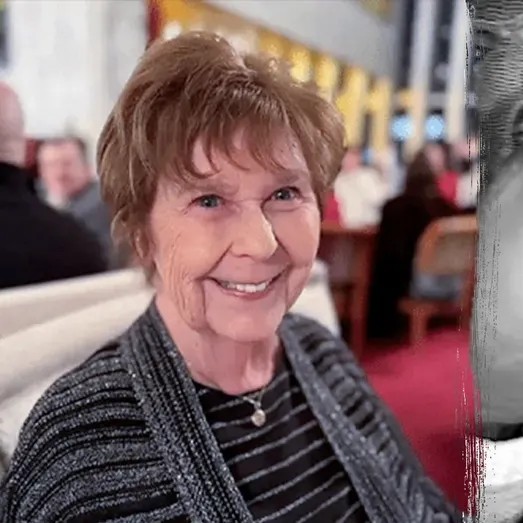
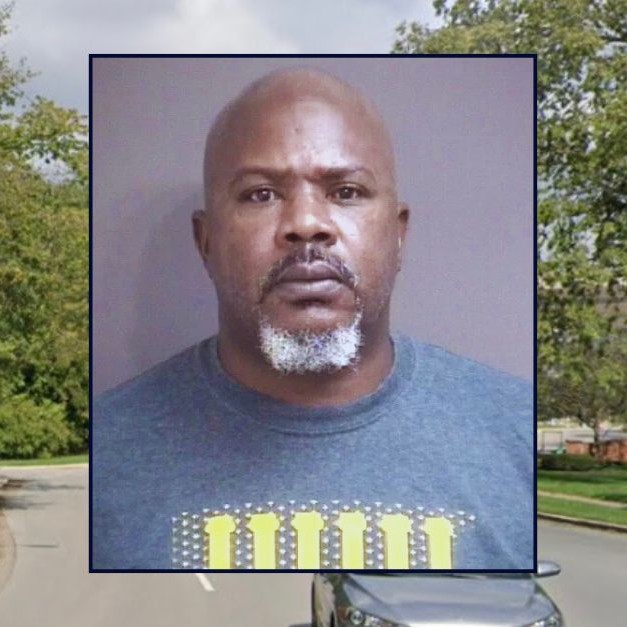
The case centers on 19-year-old Carmen Van Huss, who was killed on March 22nd, 1993, inside her apartment on Harcourt Road in Indianapolis. In 2024, more than 30 years later, investigators tied then-neighbor Dana Jermaine Shepherd, now 53, to the crime through a DNA match, leading to his guilty plea for murder and a 45-year prison sentence.
A Night That Did Not Add Up
On March 22nd, 1993, Carmen built her evening around family. She visited her grandmother in the hospital, then drove her father and 3-year-old brother back to their home. Only after those errands did she return alone to her apartment on the north side of Indianapolis.
From the outside, the building was ordinary, the kind of multiunit complex where strangers share walls, hallways, and thin slices of each other’s lives. Shortly before midnight, neighbors heard voices inside Carmen’s unit. There was conversation, and even laughter. Nothing about the sounds suggested a crime scene was forming.
Around 11:30 p.m., at least one neighbor heard Carmen with a man whose identity has never been publicly confirmed. Two hours later, the tone inside the apartment changed. A female voice screamed, “Get off me!” Heavy footsteps thudded across the floor, moving away. No one called 911. No one forced the door.
Silence settled back over the hallway, carrying with it the first missed opportunity in a case that would go cold for decades.
The Discovery No Parent Forgets
The next morning, Carmen did not show up for her shift at a local pizza restaurant. Her manager tried to reach her, and when calls went unanswered, concern shifted to alarm. Eventually, Carmen’s father was contacted.
He had watched his daughter drive away to her apartment just hours before. Now, standing at her door, he faced a lock that should have opened to an unmade bed, a messy table, or the remnants of a late night. Instead, he stepped into a scene that would haunt the rest of his life.
Inside the bedroom, Carmen lay naked in a pool of blood. Clothes and household items were scattered across the floor. Furniture was knocked over, as if the room had tried and failed to fight back. The violence had not been precise. It had been frenzied.
The autopsy counted 61 stab wounds, clustered across her face, head, and body. The medical examiner labeled her death a homicide. For Carmen’s family, that word was too small for what had happened on the other side of that thin apartment wall.
In public statements years later, Carmen’s brother described what their father walked into. He spoke of blood everywhere, of his sister’s body on the floor, of a moment that permanently altered the man who raised them. The crime scene did not just end a life. It rewrote the survivors’ futures.
A Case Freezes in Place
In 1993, investigators did what they could with the tools available. Evidence was collected from the apartment, including biological material that did not belong to Carmen. At the time, DNA databases were still limited, and complex comparisons were far slower and less complete than they are today.
Detectives interviewed neighbors, traced her movements that night, and noted that she had been heard with an unidentified man shortly before the killing. They mapped a timeline ending around 1:30 a.m., when the scream and footsteps were heard leaving the apartment.
Despite the brutality of the crime, no one was charged. The DNA did not point to a known suspect. The man heard with Carmen remained a shadow in the hallway. The file was not closed, but without a name, it might as well have been sealed in ice.
Years passed. The apartment complex saw new tenants, new cars in the parking lot, and new names on the mailboxes. Carmen’s name stayed in one place, in a box within a server room, in the memories of a family waiting for someone to admit what had happened.
The Neighbor Hiding in Plain Sight
One detail in the old file stood out: at the time of the killing, a 21-year-old man named Dana Jermaine Shepherd lived in the same building as Carmen. He was not arrested, and for decades, his name did not appear in published accounts as a charged suspect. The DNA in the state system did not connect him to the crime.
By 2024, Shepherd was living in Columbia, Missouri, working as a janitor. He had aged into late middle life, far from the Indianapolis complex where a 19-year-old neighbor never reached her 20s. On paper, he blended in with thousands of men who left their home cities behind to take modest jobs in quieter towns.
The crime scene DNA, though, never left the case. It remained cataloged, a frozen piece of 1993 waiting for a future that could read it more clearly.
The DNA That Broke the Silence
That future arrived in 2023, when a fresh analysis of the biological evidence from Carmen’s apartment pointed to Shepherd as a possible source. The sample from the early 1990s was run with modern methods, and a name emerged where there had only been an anonymous genetic profile.
Once Shepherd’s identity surfaced, the rest moved quickly. Investigators traced him to Missouri. A new DNA sample was collected from him and compared to the preserved evidence from Carmen’s case. The match gave the old file a living suspect.
In August 2024, Shepherd was taken into custody in Missouri. Within months, he was extradited back to Indiana, the state where the timeline had started and stalled. After 30 years of standing still, the case was suddenly on the clock again.
The Plea Deal and the Charge That Vanished
Prosecutors in Marion County charged Shepherd with murder and an additional count alleging rape with a weapon and deadly force. On paper, the charges described a night that began with conversation and ended as a sexual assault and homicide inside a small apartment bedroom.
In early 2026, Shepherd chose to plead guilty to a single count of murder. In exchange, the rape charge was dropped. The record now reflects one conviction instead of two, and the details suggested by the discarded count live on primarily in public statements from Carmen’s family.
The family later said the plea deal was not their first choice. They had waited more than three decades for a courtroom to name the person responsible for Carmen’s rape and murder. Trading away a charge in exchange for certainty forced them to accept a version of justice that felt partial but final.
The deal meant there would be no trial, no cross-examinations about the scream heard through the wall, no full airing of the evidence behind closed doors. Whatever the reason for the agreement, the plea locked in one fact: Shepherd would stand as the only person legally responsible for the killing.
Inside the Sentencing Room
When Shepherd returned to Indianapolis, he was no longer the 21-year-old neighbor walking the halls of Harcourt Road. At 53, he appeared in Marion County Superior Court to hear the punishment for a crime committed when he was barely older than Carmen.
Judge James K. Snyder ordered Shepherd to serve 45 years in an Indiana state correctional facility. The sentence arrived more than 30 years after Carmen’s death, in a courtroom that did not exist in the form it does now when the crime occurred.
A judge sentenced Dana Shepherd to 45 years for the 1993 murder of Carmen Van Huss at her Indy apartment.
The judge noted that under sentencing guidelines in 1993, Shepherd is required to serve approximately 50% of that sentence, which is 22.5 years.https://t.co/psOXsI4Pnw pic.twitter.com/xKxURxwEjl
— WTHR.com (@WTHRcom) February 13, 2026
In statements released after the hearing, prosecutors emphasized the length of time the case remained unsolved and framed the conviction as a measure of justice finally catching up to an old crime. For Carmen’s relatives, the focus was different. They spoke about a life taken at 19, and about decades spent watching the man they believed responsible live freely.
The family described a loss that began with a door opening onto a blood-soaked bedroom and never truly ended. They recalled that Shepherd had been able to live a normal life, to move states, and to work, while Carmen’s life stopped on a bedroom floor in 1993.
What Justice Looks Like After Three Decades
In one of the family’s recent public statements, they said they were grateful that the man responsible for Carmen’s brutal rape and murder was finally being held accountable, even if the plea arrangement did not reflect everything they believed had been done to her.
There is a tension that runs through the case: a single murder conviction set against allegations of sexual assault, overkill, and a father forced to find his daughter’s body. The law settled on a number of years. The family is left with moments that cannot be counted so neatly.
The sentence means Shepherd will be in his late 80s if he serves the full term. For many, that sounds like a lifetime. For those who watched him walk away from the building where Carmen died, it also sounds like time he already had and used, years that will never be available to the person who lost hers at 19.
The unanswered questions remain. What shifted in the apartment between the sound of laughter and the scream of “Get off me!”? Why did the crime go unsolved for so long when the killer lived just down the hall? How many other cases sit in storage, waiting for a future technology and a renewed effort to pull a name from a strand of DNA?
The hallway where Carmen lived has changed tenants and paint colors. The crime scene photos sit in evidence, their edges yellowing around a red that does not fade. In the space between those images and a 45-year sentence, the unresolved weight of the case still hangs, a reminder that some doors, once opened, never fully close.
References