


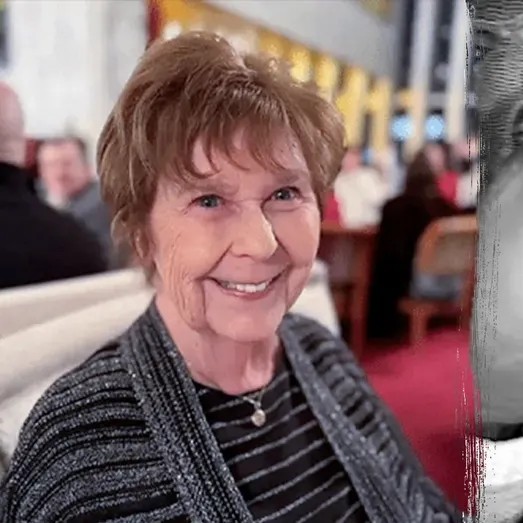
Days after the county sheriff publicly rejected talk of a narrowed suspect list in the disappearance of Nancy Guthrie, a Tucson gun dealer sat behind his counter while an FBI agent laid out three stapled pages of faces and names, and asked him to search his sales records for matches.
TLDR
As Nancy Guthrie remains missing, investigators quietly checked gun store records against a photo list, even as the sheriff denies having a suspect shortlist.
Nancy Guthrie vanished from her Tucson, Arizona, home in the hours between a family drop-off late on January 31st, 2026, and a frantic 911 call just after midday on February 1st, 2026. Federal agents compiled a list of nearly two dozen individuals and began checking local gun store records, while the elected sheriff publicly insisted that investigators had not zeroed in on a small group of suspects, leaving residents to wonder whether the investigation is as wide open as it appears.
A List of Faces and No Matches
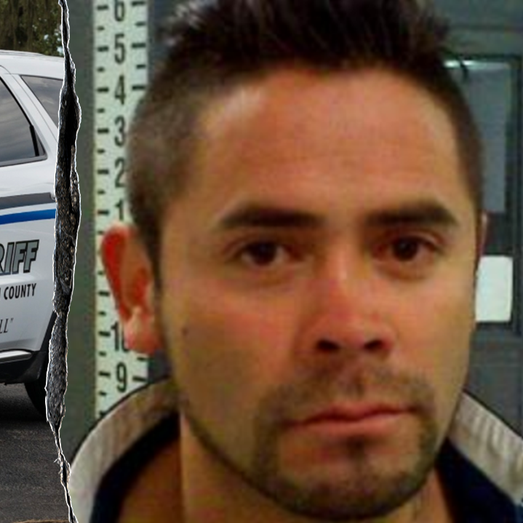
At Armor Bearer Arms in Tucson, co-owner Phillip Martin faced an unusual request. An FBI agent arrived at the store carrying three pages filled with photographs and names, roughly 18 to 24 individuals in all. The instruction was direct: run every name against the shop’s electronic records and see who had bought firearms there in the past year.
Martin initially hesitated. Gun stores handle sensitive personal information, and requests to comb through customer data do not land lightly on the counter of a small business. In this case, the context shifted the calculation. A woman from his own city had disappeared. The search had already spilled into a third week. The list was not abstract anymore; each face on those pages represented someone who might know what happened inside Guthrie’s quiet suburban home.
He sat down at the terminal and began entering last names one by one. The store’s system, designed to track purchases, would display a buyer’s identifying details if a match appeared. It stayed blank. Name after name produced no recent firearm sale linked to that shop. The agent explained that more stores across the region would get the same visit. Whatever that stack of faces represented, it was not yielding an easy gun trail.
Gun store owner says FBI asked him to check firearm sales against list of names, pics in Nancy Guthrie case https://t.co/fbPZ7cDkC8 pic.twitter.com/3XDpmnRhEI
— New York Post (@nypost) February 18, 2026
For Martin, the exercise underscored a narrow gap in time. If the person responsible for Guthrie’s disappearance bought a weapon at all, they either went somewhere else, used an older purchase, or relied on a gun that never passed through a licensed dealer’s books.
The Night Nancy Guthrie Vanished
The timeline that now defines this case starts with a familiar routine. On the night of January 31st, 2026, between about 9:30 and 9:45 p.m., family members dropped Nancy Guthrie off at her Tucson home. A short while later, at roughly 9:50 p.m., the garage door closed, recorded by the home’s automated systems as another ordinary end to another ordinary day.
Ordinary did not last. In the early hours of February 1st, 2026, at 1:47 a.m., the doorbell camera at the front of the house disconnected. Roughly 25 minutes later, at 2:12 a.m., another security camera on the property registered motion. At 2:28 a.m., data from Guthrie’s pacemaker stopped transmitting to the phone application that monitored it.
By late morning, the silence around Guthrie had shifted from odd to alarming. She missed a standing church livestream gathering, something her family knew she rarely skipped without notice. At 11:56 a.m., relatives went to the house to check on her. Seven minutes later, at 12:03 p.m., a 911 call went out from the property. Deputies arrived at around 12:15 p.m. at a scene with no sign of Guthrie and a digital trail that effectively ended in the dark.
Devices That Went Dark
From the outside, Guthrie’s home did not look like an easy target. Advanced video equipment watched over the property, with multiple cameras, a dedicated recorder, and smart devices linked to a network that, in theory, should have captured whoever approached in the night.
Instead, the system presents investigators with a puzzle. The doorbell camera, a key witness for anyone approaching the front entrance, went offline at 1:47 a.m. The home did not suddenly lose all surveillance, though, because a separate security camera still registered motion at 2:12 a.m. Somewhere between those two readings, the house grew partially blind.
Then came the most intimate data point of all: the pacemaker’s connection disappearing at 2:28 a.m. That timestamp reaches inside the missing woman’s chest and plants a flag on the timeline. It marks a moment when either the device, the phone it spoke to, or Guthrie herself ceased to function in the expected way. Taken together, the doorbell failure, the lone motion alert, and the pacemaker cutoff outline a narrow, eerie window in which something went very wrong.
A Budget Holster and a Corporate Trail
Digital traces are not the only thin threads in this case. Investigators also focused on a budget gun holster, priced around $10 and tied to a national big-box retailer. The item, standard and unremarkable on its own, became a potential link between a faceless suspect and an identifiable transaction.
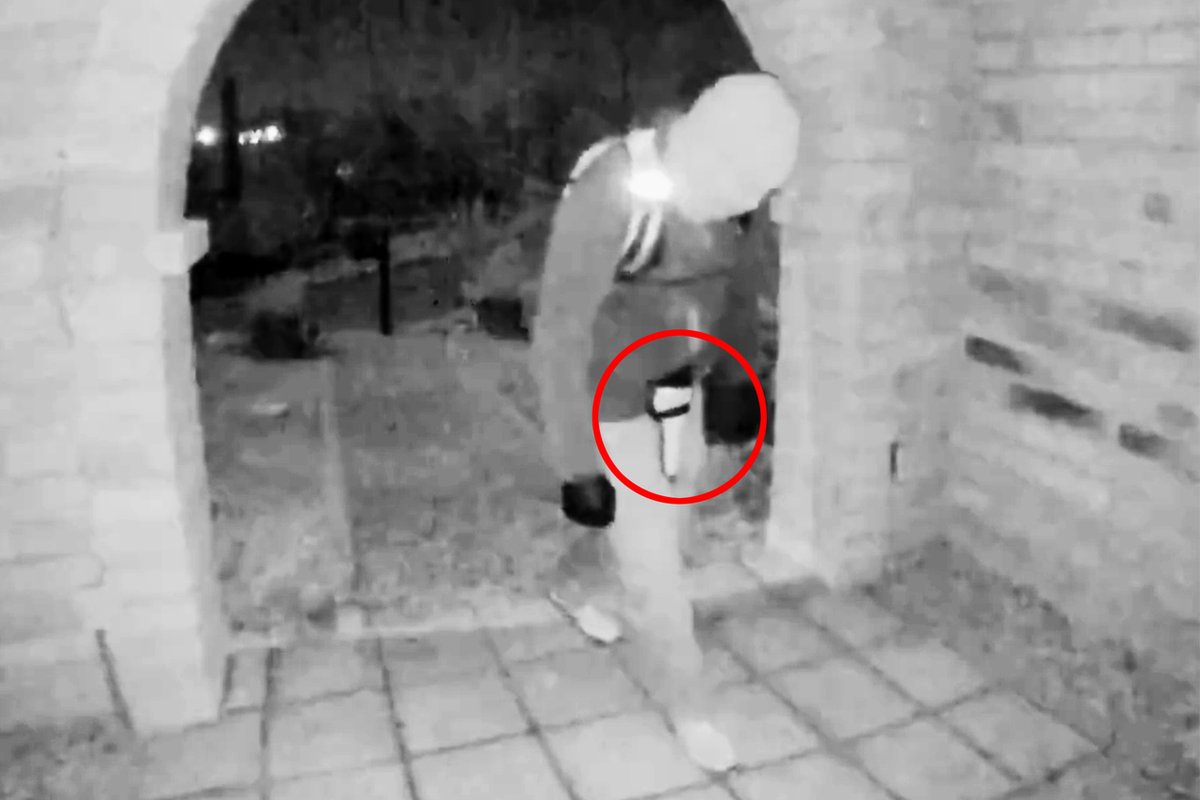
Unlike private gun sales, retail purchases leave structured footprints. A $10 holster on a shelf becomes a line item in a massive database the instant a barcode meets a scanner. Time stamps, store locations, and payment methods can narrow a sea of customers into a manageable list. Add in loyalty programs, bank cards, and surveillance footage in the aisles, and a generic piece of nylon or plastic holster material starts to carry a story.
Yet even that story has limits. The same holster sits in bins across many stores and moves through countless hands. Cash transactions leave little more than a grainy image on an overhead camera. A receipt might point to a buyer who never came within miles of Guthrie’s home. The holster, like the doorbell camera, offers both promise and uncertainty: a clear lead that might still spiral out into nothing.
Sheriff Denies a Short List
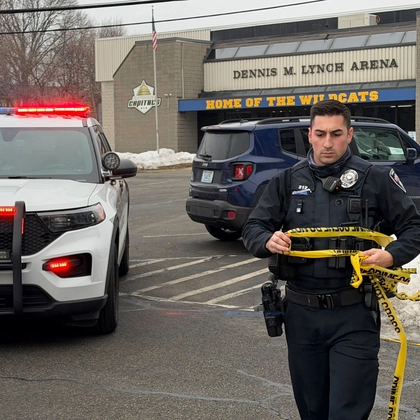
While agents quietly carried photo pages into gun shops, the public message coming from the sheriff’s office sounded very different. In a televised interview, Pima County Sheriff Chris Nanos rejected reports that investigators had narrowed the suspect pool to around 40 people.
Nanos described the case as wide open and emphasized that the focus remained on assembling scattered pieces of evidence rather than closing in on a defined group. That description clashes uncomfortably with the image of a gun store owner paging through nearly two dozen faces under federal scrutiny.
The discrepancy leaves a key question hanging over the case. If the investigation truly has not narrowed, what exactly does that list of names and photographs represent? Potential witnesses, people caught on nearby cameras, acquaintances flagged by digital records, or something closer to a true shortlist? With the search publicized and community tips flowing, the idea of a quiet, parallel track centered on a select few only sharpens local unease.
A Case Caught Between Speed and Secrecy
The Guthrie investigation now runs on two conflicting clocks. One counts the days since a woman was dropped at her own front door and vanished before morning. The other tracks how long it takes to turn data points into a human name: a camera that blinked off, a motion alert, a pacemaker log, a $10 holster, a stack of gun purchase records.
Each new measure to chase those leads carries a cost. Asking small businesses to cross-check years of records against government photo sheets pulls federal scrutiny into local commerce. Mining big-box retail systems for a single bargain holster offers a chance at progress, but also expands the shadow of the case over anyone who happened to shop the same aisle.
Meanwhile, the front of Guthrie’s house sits where it always has, facing a Tucson street that now knows its rhythms by the glow of patrol cars and camera crews. Whether the list of faces that landed on Phillip Martin’s counter holds the person responsible, or whether the real suspect still walks past unrecorded sensors and anonymous shelves, the gap between what is being done and what is being disclosed keeps growing. Until that gap closes, the most important fact in the Nancy Guthrie case remains the simplest one: she is still missing.
References
- Fox News: Gun store owner says FBI asked him to check firearm sales against list of names, pics in Nancy Guthrie case
- Fox News: Advanced video equipment seen at Nancy Guthrie home as experts break down its possible role
- Fox News: A 10 Walmart gun holster could help identify suspect in Nancy Guthrie case