


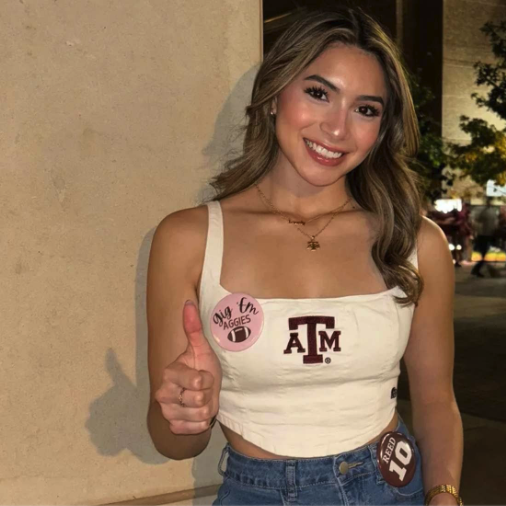
The autopsy file in Travis County now calls it a suicide, the manner of death is marked as closed, yet the case folder has not been shelved and a 19-year-old student’s family has taken their own investigation to court.
TLDR
Austin’s medical examiner ruled 19-year-old Texas A&M student Brianna Aguilera’s fall a suicide, while her family sues and claims a rushed, incomplete probe.
Brianna Aguilera, a Texas A&M freshman from the Houston area, died in the early hours of November 29th, 2024, after a fall from a high-rise apartment in downtown Austin following a rivalry football tailgate; the medical examiner later ruled the death a suicide, a conclusion that remains bitterly disputed by her family and their attorneys.
Night of the Fall
The last night of Aguilera’s life began as a celebration. Texas A&M and the University of Texas had met on the football field for the first time in years, and Austin’s party machine was running at full speed. Aguilera traveled from College Station for the game-day atmosphere, joining friends and acquaintances at a crowded tailgate.
By about 1 a.m., the energy of the night had shifted. Aguilera was at a high-rise apartment near the University of Texas campus, part of a maze of concrete, glass, and balconies that tower over the streets. At some point during those early morning minutes, she went over an upper-level ledge and plummeted to her death.
Emergency crews could not save her. The scene was quickly framed as a possible suicide rather than a crime scene. The focus moved from questions about who might have been responsible to questions about Aguilera’s state of mind.
The Suicide Ruling
In the weeks that followed, Travis County’s medical examiner completed the autopsy and signed off on a manner of death: suicide. The ruling aligned with the working theory reached within hours of the fall. Officially, the case now reads as a self-inflicted death by jumping from a building.
Digital evidence added weight to that narrative. An apparent suicide note existed on Aguilera’s phone, along with messages sent to friends on the night of her death that referenced self-harm. Those details, along with the physical evidence of the fall, became the foundation of the suicide conclusion.
With that determination, the most powerful institutions involved in the case appeared unified. The autopsy named suicide. The investigative file reflected the same. For most families, that combination closes the door.
For Aguilera’s family, it did the opposite.
A Family That Refused to Accept the File
From the beginning, Aguilera’s relatives rejected the idea that she simply decided to end her life. They pointed to her age, her status as a driven college student, and the absence of any long-standing documented mental health crisis. Their questions centered not on what she might have written in a digital note that night, but on who was with her, what those people had to gain or lose, and how the investigation around them was handled.
The family hired a high-profile legal team from Houston and began a separate push for answers. Public statements from that side of the case described the official investigation as rushed, shoddy, and far below professional standards. In their telling, the suicide ruling was not the product of a rigorous process, but of a narrow early assumption that hardened too quickly.
One phrase echoed through their communications: Brianna deserved better. Her family deserved better. It became both a mourning cry and an accusation.
Claims of a Rushed Investigation
The most specific criticism from the family’s camp concerns what did not happen in the hours and days after the fall. The official probe did not begin with a blank slate. From the outset, the working theory pointed toward suicide, and the subsequent steps reflected that frame.
Phone records for Aguilera and those closest to her that night were not fully pulled and analyzed. A complete roster of everyone present in the high-rise apartment has yet to emerge in the public record, and not every potential witness was interviewed in a sworn setting. A detailed minute-by-minute timeline of Aguilera’s final movements at the building remains incomplete.
Video is another point of fracture. In a city center lined with cameras at apartment lobbies, elevators, parking garages, and street corners, the family contends that crucial footage was never secured before it cycled out of retention systems. Without that footage, basic questions linger. Who entered and exited that apartment around the time of the fall? Did anyone follow Aguilera onto a balcony or rooftop area? Did anyone leave the building in a hurry afterward?
Each missing piece tightens the family’s belief that the suicide conclusion rests on a thin and possibly unreliable foundation.
The Lawsuit as Investigation
On January 5th, 2025, the situation moved from press statements to formal filings. Aguilera’s relatives, through their attorneys, filed a civil lawsuit tied directly to her death. The suit targets businesses that served alcohol in the hours before the fall, asserting that a 19-year-old was illegally overserved in the buildup to a deadly night.
The civil court gives the family tools that the official investigation has not yet delivered. Through discovery, they can demand phone records from carriers, internal messages from businesses, and surveillance footage that may still exist on private systems. They can compel witnesses to sit for depositions under oath and lock in their testimony.
The lawsuit also functions as an alternative narrative. Within its pages, Aguilera is not primarily defined by a digital note, but by the people, policies, and profit motives that surrounded her in the hours before she died. Alcohol service practices, security protocols in the high-rise, and the decisions of the adults and older students around her that night all move to the forefront.
An Open Case With a Closed Answer
While the medical examiner’s work is complete, the law enforcement case file technically remains open. That status means new evidence can still be collected, new interviews conducted, and the manner-of-death conclusion reexamined if sufficient contradictions emerge.
Yet for now, the most decisive action is coming from the civil side. The family’s attorneys promise a full reconstruction of the night of November 29th, from the first drink at the tailgate to the last moment captured before the fall. They signal plans to chart who rode in which cars, who sent or deleted which texts, and who might have motives to support a suicide story.
Layered on top of that is the unresolved tension around digital evidence. Suicide notes written under the influence of alcohol, fear, or coercion can be real or staged. Text messages can be sent by the owner of the phone or by someone else with access for a few minutes. Without a fully developed forensic picture of that device and its users that night, the family refuses to treat the note and texts as the final word.
Resources for people at risk of self-harm do exist, including the 988 Suicide and Crisis Lifeline in the United States, yet the Aguilera case highlights a different fear: that a death can be labeled a suicide before the surrounding circumstances are fully explored.
What Justice Might Look Like
In the months ahead, the civil suit will grind forward through motions, hearings, and discovery skirmishes. Businesses named in the complaint will fight to narrow what records must be produced. Lawyers will argue over access to internal security logs, guest lists, and building maintenance reports from the high-rise.
Some of that material, if it surfaces, could finally answer simple questions that remain strangely unresolved. Who physically saw Aguilera in the minutes before the fall? Were there arguments, injuries, or signs of distress that do not appear in the early reports? Did building staff or residents hear anything unusual from upper floors just before she went over the edge?
Other answers may never arrive. A case rooted in a fall from a great height will always face the problem of missing eyewitnesses. A phone that might hold crucial clues can be locked behind privacy concerns and technical barriers. Witnesses whose statements were not captured early may now remember only fragments.
What remains clear is that a single word on a death certificate has not settled the question of what happened to Brianna Aguilera. Between a suicide ruling, an open investigative file, and a family intent on forcing a fuller accounting, the case now lives in the gap between official closure and private doubt.
References
- Fox News: Medical Examiner Determines Texas A&M Student Brianna Aguilera Died by Suicide; Family Attorney Disputes Finding as Flawed
- Fox News: Texas Mother Demands Answers After 19-Year-Old Daughter Found Dead Hours After College Tailgate
- Fox News: Family of Brianna Aguilera Sues Over Alcohol Service Ahead of Death