


Two strangers’ DNA profiles sit in government computers, both tied to one Tucson house, yet neither is attached to a name. Somewhere between a quiet cul-de-sac and a roadside two miles away, Nancy Guthrie vanished, and the one piece of physical evidence that was supposed to break the case has only deepened the mystery.
TLDR
DNA from Nancy Guthrie’s Tucson home and from a glove found two miles away has no match in CODIS, leaving investigators with two unidentified profiles and no named suspect.
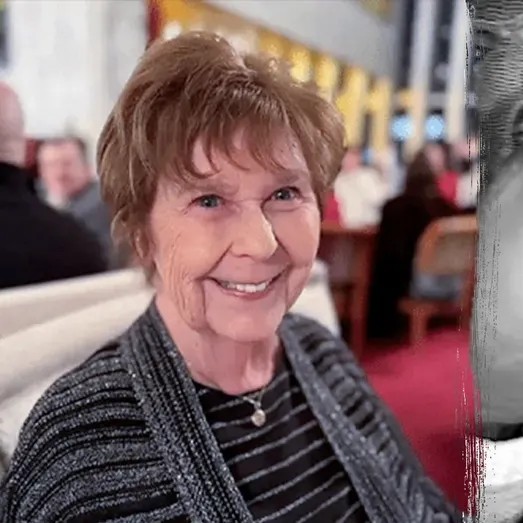
Nancy Guthrie, an Arizona woman and mother of television host Savannah Guthrie, was taken from her Tucson home in the early hours of February 1st, 2026. Evidence points to a forced abduction. A set of black gloves discovered near a roadside two miles from the house produced one DNA profile, while samples collected inside the home produced another. Neither appears in the FBI’s Combined DNA Index System, and the two profiles do not match each other.
Two DNA Profiles and No Names
In most modern abductions, DNA is the cleanest thread to follow. In this case, it splits into two. Swabs from inside Guthrie’s home produced one genetic profile. A glove linked to a set of black gloves found two miles away produced another. Both profiles were run through CODIS, the FBI database built to match crime scene DNA to known offenders, arrestees, and prior unsolved cases. Both searches came back empty.
The result is not just one unknown suspect but potentially two. The glove DNA does not match the profile lifted from inside the home. Either more than one person touched Guthrie’s life in those final documented hours, or at least one key item came from an entirely different context and landed in this case by coincidence, contamination, or staging.
DNA without a name is still powerful, but it is slow. It can exclude family, neighbors, and known associates. It can be compared against fresh samples from new persons of interest. It can sit in databases for years, waiting for a future offender’s entry to finally light it up. For now, in the Guthrie file, both profiles are just silent strings of numbers.
An Intruder in the Quiet Hours
The visible timeline starts the night before the disappearance. On January 31st, 2026, family members dropped Guthrie at her Tucson home between 9:30 p.m. and 9:45 p.m. By 9:50 p.m., the garage door had closed. The house should have been locked into its usual quiet routine.
Instead, the digital trail begins to fray. At 1:47 a.m. on February 1st, the doorbell camera disconnected. At 2:12 a.m., another security system registered motion. Sixteen minutes later, at 2:28 a.m., Guthrie’s pacemaker stopped sending data to the phone application that monitored it. Those are the last hard electronic traces tied directly to her.
When family members tried to reach her late the next morning for a weekly church livestream, she did not answer. By 11:56 a.m., concern was high enough that relatives went to the house to check. At 12:03 p.m., a 911 call went out. By 12:15 p.m., sheriff’s deputies were at the home. Guthrie was gone.
Investigators later described her removal from the house as forcible, not voluntary. The short window between the camera going dark, the motion detection, and the pacemaker disconnection hints at a compressed, deliberate intrusion carried out under the cover of darkness while the rest of the city slept.
The Glove by the Roadside
Days into the search, attention shifted beyond the property line. Two miles from Guthrie’s home, along a roadside, a set of black gloves appeared. At least one carried usable DNA. That profile became the subject of intense interest because it could belong to the person who took her, to an accomplice, or to someone who simply dropped a glove in the wrong place at the wrong time.
Forensic testing tied the glove to the case timeline and confirmed its DNA did not match Guthrie’s. When the profile went into CODIS, the database stayed silent. No match to known offenders. No link to other crime scenes. No overlap with the profile from inside the house.
No DNA matches on glove found in Nancy Guthrie case, police say – The sheriff told the BBC that he is confident they will find her – whether it takes “10 days, 10 months, or worse”. via @BBC https://t.co/zInIxAhqiI pic.twitter.com/o8095fnd5t
— 🌊💙 Viking Resistance 💙🌊 (@BlueCrewViking) February 18, 2026
The location of the gloves only multiplies the questions. Did the abductor walk that route, discard evidence there, or transfer the gloves by vehicle before tossing them out? Were the gloves used to avoid leaving prints inside the home, or do they belong to someone who never set foot on Guthrie’s property? The genetic trail leads outward into open desert and suburban streets, then stops.
Delayed Tests and Growing Pressure
The DNA samples went to a private laboratory that handles complex forensic work. That lab follows weekday business hours. When the Guthrie samples arrived around a holiday weekend, the facility was closed on February 14th and 15th, and typically does not run full operations on Saturdays and Sundays unless special arrangements are made.
In a case where every day without a lead feels like a lost chance to intercept a living victim, even routine scheduling becomes a point of friction. Time spent waiting for doors to open and machines to spin up is time when a suspect can leave the state, discard clothing or weapons, wipe vehicles, and watch coverage to see what investigators know.
The lab has indicated it can open on weekends if specifically requested. Whether that option is used in future rounds of testing may determine how quickly new profiles, deeper analyses, or rechecks of borderline samples appear in the file.
Turning to Genetic Genealogy
CODIS is designed for people who have already crossed paths with the criminal justice system. In the Guthrie investigation, both key profiles appear to belong to individuals who have not. That closes one door, and cracks open another.
In other recent cases, when CODIS goes quiet, investigative teams have turned to investigative genetic genealogy. That technique takes crime scene DNA, builds a consumer-style profile, and compares it against publicly available or voluntarily submitted DNA in commercial genealogy databases. From there, specialists construct sprawling family trees that can narrow thousands of distant relatives down to a single likely suspect.
In 2018, the method helped identify the Golden State Killer after a distant cousin’s profile in a genealogy database provided the first foothold. The Guthrie case now sits at a similar inflection point. With two unidentified profiles and no hits in traditional law enforcement databases, the path to a name may run through relatives who have never heard of Nancy Guthrie but decided years ago to mail their DNA off to learn about ancestry.
Family in the Spotlight
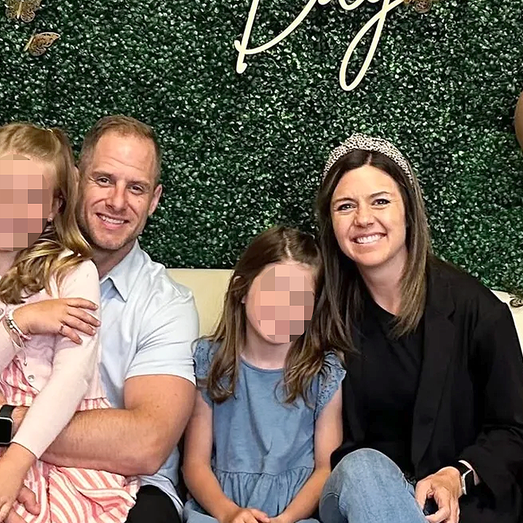
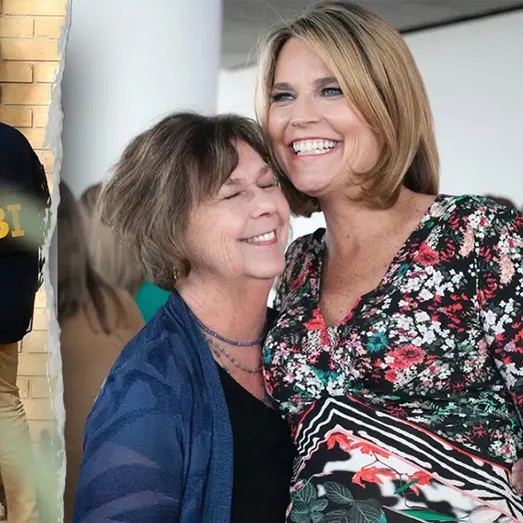
This is not a quiet disappearance. Guthrie’s daughter, Savannah Guthrie, hosts a major morning news program and lives in the public eye. That connection has turned a local abduction into a national story, drawn cameras to the cul-de-sac, and placed every scrap of information under a brighter, harsher light.
Early on, investigators eliminated immediate family members as suspects. The ruling removed one familiar category of potential perpetrators but left a more unsettling picture. If this was not a domestic dispute that spiraled, then someone outside the family’s inner circle studied an older woman living alone, learned her routines, and picked a window when cameras and alarms could be neutralized.
In a recorded message released to the public, Savannah Guthrie emphasized hope and urged whoever holds the key to her mother’s whereabouts to come forward. The appeal was not just for information but for conscience, an attempt to reach a person who remains unseen and unnamed in official files.
A Timeline With Gaps
Between the last family goodbye and the arrival of deputies, nearly fifteen hours passed. Within that span, only a handful of digital events punctuate the darkness. The garage door closes around 9:50 p.m. The doorbell camera disconnects at 1:47 a.m. Motion registers at 2:12 a.m. The pacemaker drops off the monitoring app at 2:28 a.m. A concerned family member calls 911 at 12:03 p.m.
What happened inside the house between 9:50 p.m. and 1:47 a.m.? Was the doorbell camera taken offline by a technical glitch, a power disruption, or a deliberate hand reaching for a wire or a settings menu? Does the motion detected at 2:12 a.m. mark the moment an intruder entered, the struggle, or a final exit?
The pacemaker disconnected at 2:28 a.m., adding a chilling marker. Did that signal loss occur because the device left the range of the paired phone, because the phone was damaged, or because Guthrie’s body experienced something that disrupted the link? None of those questions have publicly documented answer. Yet each timestamp presses against the others, demanding a narrative that fits all of them at once.
Questions That Still Hang Over Tucson
Weeks after the abduction, Guthrie’s home remains less a crime scene than a puzzle box. There is a victim who did not walk away on her own. There is a set of gloves two miles down the road that may or may not belong to her abductor. There are two distinct DNA profiles, neither tied to the other, neither tied to any prior case inside CODIS.
Somewhere in that tangle lies a sequence of actions carried out in the span of less than an hour on a February night. Someone learned Guthrie’s patterns, crossed into her home, overpowered her, and left without triggering a rescue in time. The unanswered question is whether science, databases, and new forms of genetic sleuthing will eventually force that person’s name onto paper, or whether the Tucson desert will keep this secret for another season.
References