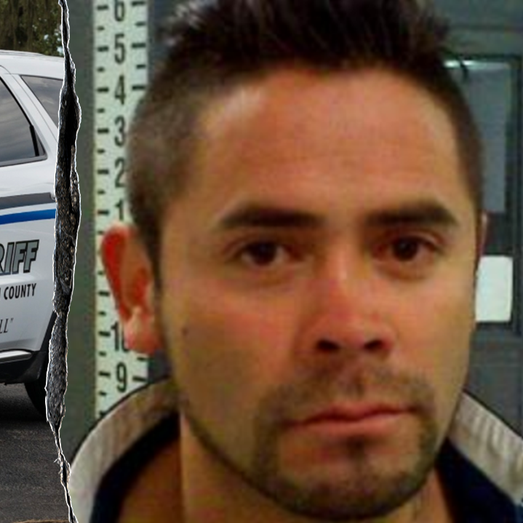


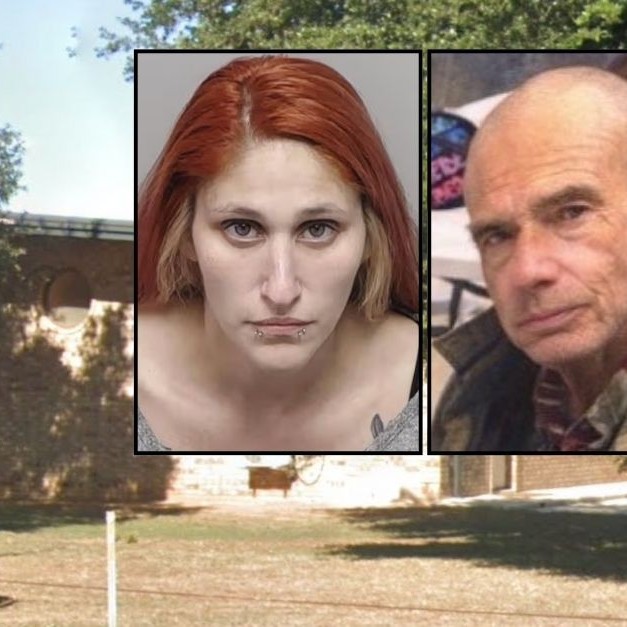
By the time Abigail Molina walked into a station and insisted she had “nothing to hide,” her boyfriend lay dying from a shattered skull, his truck missing, his blood scrubbed from the church shed where he lived.
TLDR
Investigators in Bexar County accuse Abigail Molina of killing her boyfriend, Gilbert Parker, in a church shed with a hammer, abandoning him, then hiding the weapon and altering his truck before selling it.
The case centers on a 32-year-old woman, a 64-year-old man, and a tool shed on the grounds of a small church in China Grove, Texas. Parker was found there on January 18th, 2026, gravely injured and barely clothed, and died two days later. Molina now faces first-degree murder, theft, and evidence tampering charges, while claiming she fought back in self-defense.
A Body in the Church Shed
On a Sunday in January, Old Path Baptist Church sat quietly just east of San Antonio. Behind the sanctuary, in a garden area, a shed had been converted into living quarters for Parker. Inside that cramped space, emergency responders found him unconscious, partially naked, and covered in dried blood.
The shed, outfitted to function as a makeshift room, held the signs of a prolonged struggle. Blood-stained surfaces inside. Parker was transported to one hospital, then to another, drifting in and out of consciousness but unable to explain what had happened inside that narrow structure behind the church.
Two days after his discovery, on January 20th, Parker was pronounced dead. An autopsy documented lacerations to his head and a blow strong enough to fracture his skull and cause bleeding within his brain. The damage pointed to a focused, brutal impact from a hard-edged object.
Different Places in the Relationship
Before the shed became a crime scene, it was Parker’s shelter. Friends described him as invested, even possessive, in his relationship with Molina. The pair had argued before. To at least one observer, they seemed to occupy different emotional ground, with Parker more attached and controlling while Molina pulled away.
The last time Molina publicly acknowledged seeing Parker alive, she placed herself with him on January 13th at a local smoke shop. There, by her account, an argument boiled over into a fight. What happened after that confrontation is now the core of a murder case. Molina has declined to provide detailed descriptions of those final hours she says they shared.
From Self-Defense Claim to Murder Charge
The day after Parker was found in the shed, Molina reached out to China Grove officers. She framed the violence as self-defense, describing an altercation that ended with Parker hospitalized. She insisted she had “nothing to hide.” Yet even at that early stage, the facts around her story strained under their own weight.
Molina offered what investigators later described as vague, scattered details about her relationship with Parker. She emphasized the smoke shop dispute days earlier, but did not supply a clear account that filled the gap between that argument and Parker being discovered, bleeding and half-naked, in a shed on church property.
As the medical evidence came into focus, so did the gap between a sudden defensive swing and what anatomists recorded. Parker’s fractured skull and internal brain bleeding suggested severe, targeted blows. The question started to shift from whether there had been a fight to how far it went, and why no one called for help from the shed where he was left.
The Missing Truck and Erased Blood
Parallel to the medical findings, a quieter set of absences began to tell its own story. Parker’s cellphone was gone. So was his wallet. Most conspicuously, his 2002 Dodge Dakota pickup truck had disappeared from his life at precisely the moment he could no longer drive it.
That truck did not vanish into thin air. It surfaced near the home of a close associate of Molina. Witness accounts and case documents describe Molina working on the vehicle, spray paint, and sanding tools in play. She brought the truck to a car wash where blood stains were cleaned away. Then, despite its value as her boyfriend’s main asset, she sold it in Houston for only $300.
Every step around that truck moved in the opposite direction from a woman with nothing to hide. Instead of preserving the vehicle of a man she claimed to have defended herself against, Molina altered it, washed it, and disposed of it for a fraction of its worth.
Tips, a Culvert, and the Hammer
By February 1st, word of the case had spread through San Antonio’s circles of acquaintances and former partners. One caller, describing a family connection to someone who had dated Molina, reached a homicide detective with a stark allegation: the smoke shop fight had escalated until Molina killed Parker.
The next day brought a second call, this time directing investigators to a specific place instead of a rumor. The tipster pointed to a stormwater drainage culvert. Inside it, searchers recovered a construction hammer. One claw was missing.
Parker’s head wound involved a fracture and internal bleeding that fit the dimensions and severity of a heavy blow from such a tool. A hammer with a broken claw, tucked away in a drainage channel, aligned neatly with the autopsy’s description and the damage inside the shed.
The Call for Help That Never Came
The most chilling account did not come from a stranger. Molina’s former boyfriend later described receiving a call from her on January 15th, three days before Parker was discovered. She was crying, he recalled, and asked for help.
During that phone call, Molina described an attack. She said Parker had hit her. She said she blacked out. She said she hit him with a hammer repeatedly. The picture that emerges from that version is not of a split-second defensive swing, but of sustained, repeated force.
Yet even in that telling, no one dialed 911 for Parker. Instead, the man Molina described striking again and again was left in a shed on church property, his injuries unfolding in darkness and silence.
What Happened inside the Church Grounds
Inside Old Path Baptist Church, Parker was known enough to be given space to live. After he was removed from the shed and taken to the hospital, people connected to the congregation entered his living quarters. They cleaned up the blood. They removed items that belonged to him, including alleged drug evidence tied to his life there.
In doing so, they swept away part of the physical history of what happened to Parker. Blood patterns, trace materials, and objects out of place might have clarified whether the struggle began in the shed or ended there, and how long he lay wounded before anyone found him.
Those choices added another layer of distortion to an already fractured timeline. The crime scene became, in part, a cleaned room curated by people who knew the man who died there. Whatever their reasons, the result is the same. The shed now conceals as much as it reveals.
Charges and the Questions Ahead
By early February, the evolving picture of the hammer, the truck, and Molina’s own words hardened into formal accusations. She was arrested and booked into jail on charges of first-degree murder, theft, and tampering with or fabricating physical evidence with the intent to impair.
The murder count reflects the state’s position that Molina did more than defend herself. The theft and tampering allegations focus on the missing phone and wallet, the altered pickup truck, and the alleged effort to hide the very tool that shattered Parker’s skull.
Molina maintains that she acted to protect herself from an abusive, older boyfriend. The evidence surrounding her, however, folds back on her steps after the violence: the days between the smoke shop fight and the 911 call, the unreported injuries, the erased blood, the cut-rate sale of a man’s only truck, and the hammer tucked into a culvert instead of turned in.
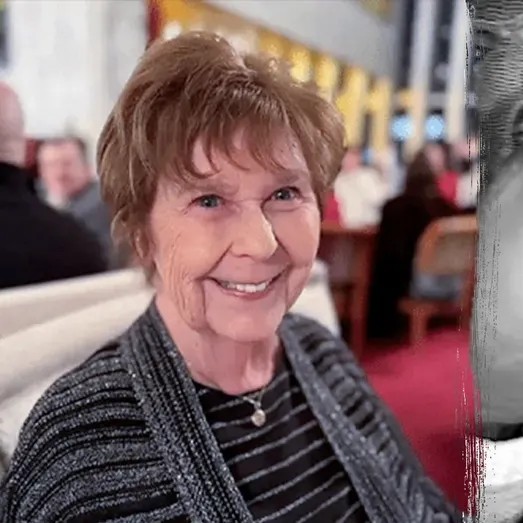
Parker, remembered in his obituary as a “man full of life and music,” will never answer questions about that last confrontation. Molina will, eventually, face them in a courtroom. Between them stands a church shed, scoured of blood yet thick with doubt, and a set of choices that turned a private relationship into a public killing.
A jury will someday sort through the broken hammer, the vanished hours, and the vanished truck. Until that happens, the case sits at the edge of two clashing stories, with a quiet church yard in China Grove holding the most important answers that no one can now fully see.