


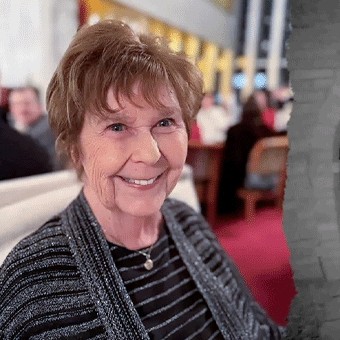
The figure on Nancy Guthrie’s porch should not exist in a Tucson afternoon. A ski mask in desert heat, a reflective backpack, a holstered handgun riding awkwardly on a belt, and an 84-year-old woman alone behind the door. Minutes later, Guthrie was gone, and for weeks, the man in the footage was just a shadow moving through pixelated light.
TLDR
New FBI doorbell footage of a masked visitor to 84-year-old Nancy Guthrie’s Tucson home spotlights five physical clues, exposes investigative gaps, and reframes a stalled disappearance case.
Guthrie, an 84-year-old resident of Tucson, Arizona, vanished from her home after a masked person approached her front door, an encounter captured on video and later released by the FBI. There is no named suspect, no arrests, and a homicide squad with limited experience, while shifting accounts of Guthrie’s plans and a series of suspect letters deepen the unease around what really happened that day.
The Knock That Rewrote the Timeline
Early versions of Guthrie’s last known movements centered on a familiar Sunday ritual. The story described an older woman heading to church, a routine that would have taken her out of the house long before trouble arrived at her front door.
Then the narrative shifted. It emerged that Guthrie was expected at a friend’s home instead, not at church. That quiet correction did more than swap one destination for another. It introduced a crack in the foundation of the timeline, the kind of crack investigators lose sleep over.
If Guthrie was due at a friend’s house and never arrived, the window for whatever happened to her narrows. The masked figure on the porch no longer appears against a vague backdrop of Sunday plans. The person in the ski mask walked up to that door at a time when Guthrie should have been on the road, not sitting at home.
The correction also raises a question that still hangs over the case. Was the masked visitor counting on Guthrie being there, or counting on everyone else believing she would be somewhere else?
Five Clues in a Few Seconds of Video
The doorbell camera sees more than the human eye. It does not look away when a face is covered, when a gun is half hidden, when clothing choices make no sense for the weather. It records, frame by frame, the kind of details that can either solve a case or haunt it.
The first detail is the mask itself. It is not a bandana grabbed from a drawer or a sweatshirt pulled up in panic. It is a distinct ski mask, an object that traveled through a supply chain, sat on a shelf, and passed through a register. In a desert city where triple-digit temperatures are common, that kind of winter gear stands out. Somewhere, there is a receipt for it.
The second detail is what the mask cannot hide. Even grainy video renders the basic structure of a face. The shape of the eyes, the span of the cheekbones, the width of the mouth. Eyebrows can be plucked or drawn, beards can be shaved, hair can be buzzed away. Bones and eye sockets do not cooperate so easily. Facial analysts can build a gallery of possible matches off those static traits, while the rest of the world watches a figure in black walk up a short path and ring a bell.
Then there is the clothing. The jacket and pants fall in a way that suggests weight, texture, and cut. They are not generic blur. Seams, pockets, and logos hide in the pixels. Modern retail lives on pattern data, inventory logs, and brand signatures. A single style of work jacket might ship to a handful of local stores or to a specific big-box chain in the region. Tying that fabric on the screen to a batch number in a warehouse is tedious work, but each stitch is a potential breadcrumb.
On the masked figure’s feet, light-colored shoes move across the concrete. Footwear is the fourth clue. Shoe size, sole pattern, and wear affect gait. The length of each step, the angle of the ankle, the slight dip on one side, all feed into gait analysis. The same details help narrow height and build, especially when measured against a fixed object, like a doorframe. Even without a clear face, the walk itself becomes a partial fingerprint.
The fifth clue rides on the suspect’s back and waist. A backpack with reflective strips glows against the camera’s sensor, and a holster sits awkwardly on the belt, apparently housing a gun it was not built to carry. The reflectors suggest gear designed for a specific market, possibly camping, hiking, or work done in low light near traffic. That sort of product is not sold everywhere. It moves through outdoor chains, specialty shops, and online orders that can be filtered by ZIP code.
The holster is its own problem. A weapon jammed into the wrong rig implies improvisation, not professional comfort. The pairing hints at someone who wanted to bring a firearm, but did not invest in the right equipment, or did not care enough to conceal it properly. It is a small act of carelessness in an otherwise calculated appearance, and it may be the detail that narrows the suspect pool from thousands of people with similar jackets to a smaller circle of gun owners who bought the wrong gear.
Retail Trails and Digital Ghosts
Each of those five clues points toward data sitting quietly in servers and stockrooms. A ski mask shipped to a Tucson store in a limited run. A reflective backpack advertised for specific outdoor uses. A certain cut of pants ordered in bulk for a regional sale. A holster designed for one model of handgun, sold to someone who uses another.
In a vacuum, that information is just commerce. Inside a missing person investigation, it becomes a map. Payment methods link to card numbers, card numbers to names, and names to addresses and phone records. Even cash purchases sometimes leave an echo, tied to loyalty programs or security video at the register.
The suspect in the footage tried to erase their face. The rest of the outfit may have done the opposite. If the mask is uncommon in Tucson stores, the backpack part of a narrow product line, or the holster bought from a niche vendor, the combination is almost eccentric. People in a community remember that kind of shopper.
Meanwhile, the backpack’s reflectors do something else. They suggest an intention to be seen in the dark from certain angles, long before anyone stepped onto Guthrie’s porch. Someone chose gear meant to catch light, then walked into the field of a doorbell camera. That tension between concealment and visibility runs through the whole image.
An Experienced Crime, an Inexperienced Squad
The masked figure in the video moves with confidence. Whoever approached Guthrie’s door that day chose their clothing, weapon, and approach with planning. The crime itself feels practiced.
The team assigned to confront that level of planning tells a different story. Within the local homicide squad working the Guthrie case, only one detective reportedly has more than two years of experience handling homicide investigations. On paper, the unit is official and active. In practice, much of it is still learning the deep, methodical work of building a complex case under pressure.
A disappearance involving an elderly victim, a possibly armed suspect, cross-jurisdictional evidence, and a national law enforcement agency should be the kind of file that lands on the desk of veterans. Instead, it sits with a mix of experience and on-the-job training. That imbalance invites mistakes that do not always look like dramatic blunders. Sometimes they are quieter.
A delayed canvass on a critical retail lead. A witness interview done once instead of three times. A failure to immediately recognize that a shift from church to friend’s home in the last known plans is not a minor correction, but a potential turning point.
In the Guthrie case, the release of the doorbell footage arrived weeks after the disappearance, not days. During that gap, the person in the ski mask could have changed their look, dumped the backpack, or discarded the shoes, while public attention dulled at the edges. The case feels like a race in which the starting gun went off late.
A Calculated Push to the Public
When the FBI finally published the footage, the move felt abrupt from the outside, but the timing was deliberate. The video release pulled the case back into national view and placed the suspect’s outline in front of millions of potential witnesses.
FBI searching through bushes near Nancy Guthrie’s home as hunt continueshttps://t.co/l6nrTP224g pic.twitter.com/P3V5J59rgy
— Irish Star US (@IrishStarUS) February 12, 2026
The choice of frames was careful. Enough of the jawline and gait to be useful, but not so much that a defense attorney could later argue that a jury had been poisoned by weeks of viral speculation. The backpack’s reflectors flash. The gun’s outline complicates the narrative. The mask dominates every frame.
The strategy hinges on a simple gamble. Somewhere in Tucson, someone recognizes that combination of gear. A neighbor who saw the backpack twice. A cashier who remembers the odd mix of winter mask and desert address. A co-worker who saw the wrong gun jammed into the wrong holster during an off-the-clock errand.
If that call never comes, the footage becomes something else, a gravestone video replayed on anniversaries, a few seconds of movement standing in for a whole life taken off the map.
What Remains Unanswered on a Quiet Street
Months into the search, the basic facts are brutally simple. Nancy Guthrie is missing. The masked person on her porch has not been publicly identified. No arrests have been announced. The case file grows thicker, but the space where a suspect’s name should sit remains blank.
The doorbell camera sees the approach, but not the outcome. The backpack’s path before and after the visit is still a line waiting to be drawn. The retail trails hidden in barcodes and invoices have not yet yielded a name the public can see.
On that street in Tucson, the concrete where the masked figure once stood is just another piece of sidewalk again. Somewhere, the ski mask, the reflective backpack, and the ill-fitting holster either still exist or have been destroyed. The answer to what happened to Nancy Guthrie likely sits on a security server, in a store log, or in the memory of someone who has not yet connected what they saw to the woman who never made it to a friend’s home.
References
- Fox News: Five Critical Clues FBI Footage Could Pinpoint Suspect Nancy Guthrie Disappearance: Experts
- Fox News: Nancy Guthrie Was Expected at Friend’s Home, Not Church on Day She Vanished: Source
- Fox News: Only One Local Detective on Nancy Guthrie Case Has Over Two Years of Experience on Homicide Squad: Sources
- Fox News: Ex-FBI Official Flags Possible Scam as Third Alleged Nancy Guthrie Letter Emerges
- Fox News: Retail Records Could Unmask Potential Subject Nancy Guthrie Case, Experts Reveal Clothing Evidence