


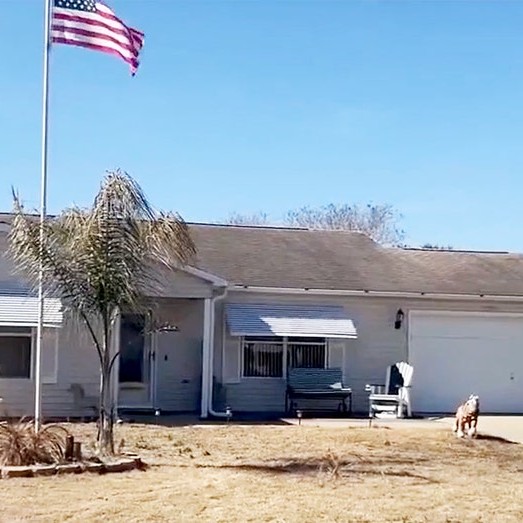
By the time golf carts started turning around on Rio Ranchero, the quiet Florida street was already under a silent kind of lockdown, its cul-de-sacs sealed by patrol cars and yellow tape, its residents told to leave without being told why stolen military explosives had ended up in one of their homes.
TLDR
Stolen military explosives were discovered in a home at The Villages in Florida, prompting evacuations, a bomb squad response, and an FBI investigation with no public arrests yet.
The discovery unfolded in The Villages, the sprawling age-restricted community that stretches across three Central Florida counties. Late on a Tuesday morning, a call about suspected explosive military items brought deputies to a single residence in the Village of Rio Ranchero, near Spanish Springs, where nearby homes were ordered cleared and a regional bomb squad was summoned. The devices were later identified as military property reported stolen, removed from the neighborhood, and turned over as part of a federal investigation now led by the FBI.
Inside a Manufactured Calm
The Villages sells a particular kind of quiet. Manicured lawns, rules about paint colors, and golf carts sharing the road with sedans create a sense that nothing truly unpredictable is supposed to happen here.
On that Tuesday, the illusion fractured in the late morning. Residents who were home were told to leave, not for a fire or a gas leak, but for something more vague. The direction was simple: step outside your routine, get in your cart or car, and move away from your own street.
Evacuations in the surrounding blocks were described as precautionary, a phrase that fails to capture the unease of watching emergency vehicles assemble around a single house while no one explains what, exactly, might be close enough to kill you.
At the center of it all sat an ordinary residence, indistinguishable from its neighbors until the day it became an evidence site. Inside that home, investigators found explosive devices that did not belong in a retirement enclave. They belonged to the military.
The 11:00 Call
The official timeline marks 11:07 a.m. as the moment uniformed deputies reached the house on Rio Ranchero. Before that, the street was just another late-morning loop in Sumter County, with sprinklers ticking and delivery vans rolling slowly past.
The triggering call described items that looked like explosive military hardware, specific enough to separate this from the usual noise that filters into a sheriff’s dispatch center. This was not a vague tip about suspicious behavior. Whoever made that call gave enough detail to send deputies in fast and to justify a bomb squad on standby.
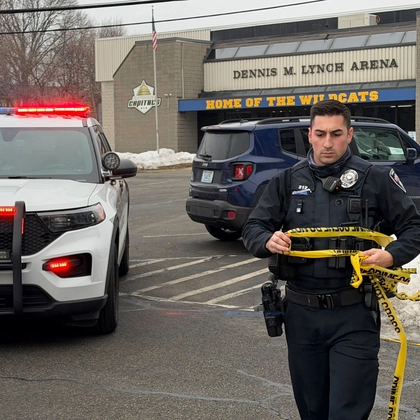
Within minutes of arrival, the scene shifted from a welfare check to a containment operation. Access to the residence is limited. Vehicles were positioned in ways designed to shield rather than merely to control traffic. Neighbors were moved farther back.
The contrast between the timestamp and the memories of those forced outside hangs over the day. A single minute on a log marks the divide between routine and emergency, but the questions start earlier. How long had the explosives been sitting inside that house before anyone noticed enough to pick up a phone?
From Living Room to Crime Scene
The bomb squad unit from neighboring Lake County rolled into the neighborhood with heavy equipment, the kind designed for scenes involving real risk, not false alarms. Streets built for golf carts and sedans suddenly had specialized trucks and protective gear in their place.
Technicians worked through the home and its immediate surroundings, removing items classified as hazardous military explosives. The work did not unfold in public view. Residents saw uniforms, equipment, and the careful choreography of people trained to assume the worst until it has been physically removed.
By the time the area was cleared, one fact rose above the rest. The explosives did not come from a civilian stash or homemade experiments. They had been lifted from the military, diverted at some point from an arsenal that is supposed to be counted, locked, and audited.
No one living along that street had been injured. No neighboring property had been damaged. Yet the sense of safety had been hit differently. An ordinary house in a meticulously planned community had doubled as storage for devices built for war.
A Federal Trail With Missing Links
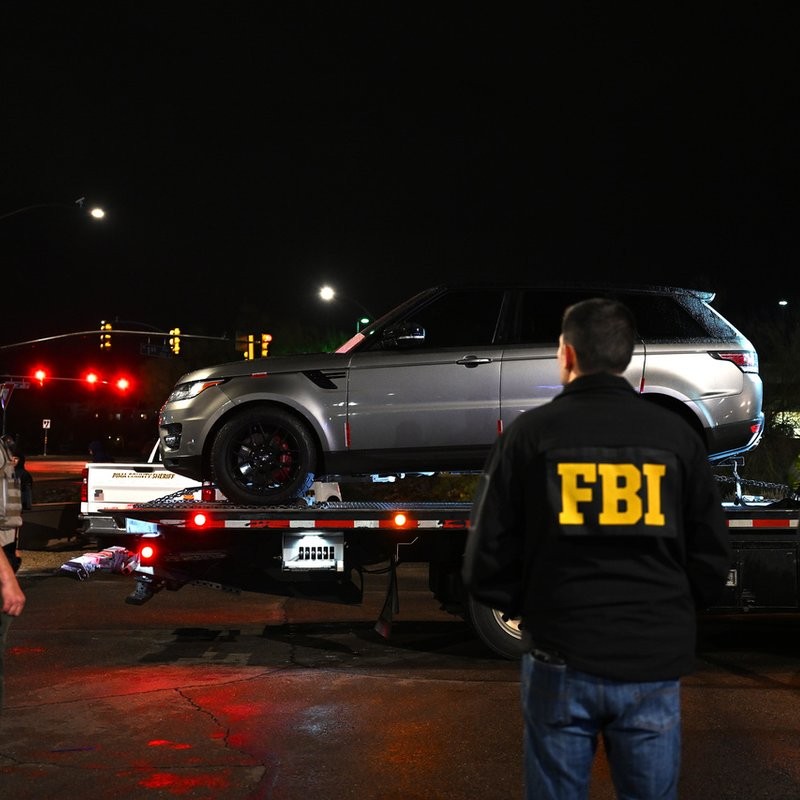
Once the bomb squad removed the last of the explosives, the case shifted from local control to federal hands. The FBI took over, turning a neighborhood scare into a larger question about national stockpiles, supply chains, and who has their hands on military-grade weapons far from any base.
At the center of the mystery sits the home itself and whoever occupies it. Public notices about the incident did not attach a name to the address. There was no immediate announcement of an arrest, no booking photo, and no charging document released for residents to read.
Without a named suspect, the focus turns to the explosives. Each device, each serial number, each component traces back to an armory, a shipment, a logbook entry. Somewhere on a military base, those items were once marked as present, then at some point, they were not.
Whether the theft involved a single insider slipping items out over time, a paperwork failure that disguised a more brazen diversion, or a secondary market that moved stolen ordnance into civilian neighborhoods, the public record has not yet filled in that gap. The only confirmed bridge between the base and the living room is that the explosives were never meant to travel that far.
Gated Communities and Open Questions
The Villages operates like a small city with its own culture, rhythms, and unwritten code. Incidents involving gunfire, sudden evacuations, or unexplained law enforcement presence threaten more than a sense of comfort. They challenge the belief that gates, rules, and carefully curated branding can keep the outside world at bay.
Florida’s master-planned communities have seen gun violence inside their walls before, undercutting the idea that controlled entrances can filter out risk. Now, the presence of stolen military explosives in a single-story home inside The Villages adds another, sharper edge to that reality.
Residents who watched the response from a distance were left with questions that no public statement has yet answered. How much explosive material was inside the house? How long had it been there? Did anyone in the neighborhood notice deliveries, late-night activity, or changes in routine that now feel like warning signs in hindsight?
The people living closest to the incident also face a more intimate concern. If one neighbor’s home can conceal stolen ordnance, what reassurance exists that this was a one-off event, not a symptom of a wider, quieter pipeline bringing military hardware into civilian hands?
A Case Still in the Dark
As the FBI works the federal side of the investigation, the street in Rio Ranchero returns to its practiced normal. Lawns are trimmed, carts hum along, and the house that held stolen explosives blends back into its row of near-identical facades.
Behind that ordinary exterior lies a paper trail that stretches beyond county lines and retirement gates, into inventories and armories that are supposed to keep strict count of every explosive device. Somewhere along that chain, someone knew, or should have known, that something had gone missing.
Until a name is attached to the case, until a charging document lays out how military explosives crossed into a Florida living room, the residents of The Villages are left with an uneasy equation. Their community promises security, routine, and predictability. The events of that Tuesday morning prove that even here, the most dangerous threats may already be inside the gates.
The investigation continues in the background, out of public view, its details sealed behind federal procedure. The street is open again, but the core questions remain closed. Who moved the explosives, how wide the theft runs, and whether similar stockpiles sit undiscovered in other quiet neighborhoods are answers still waiting on the far side of an active case file.
References