


TLDR
The FBI released a surveillance image of a person of interest in Nancy Guthrie’s disappearance, tightening a 41-minute window and intensifying scrutiny of those familiar with her home and routine.
84-year-old Nancy Guthrie was last seen on January 31, 2026. Her SUV remained in the driveway, her phone stopped transmitting, and a narrow slice of time, between roughly 1:47 a.m. and 2:28 a.m., emerged as the frame in which she was likely taken. Inside that window, a single figure now captured in an FBI image moved through her street, and every known fact since has been orbiting that silhouette.
The Morning That Collapsed
The day Nancy disappeared began like almost any other, which is part of the problem. She was expected that morning, not at church as first assumed, but at a friend’s home. The shift in that detail, minor on paper, widened the blind spot around her movements and undercut early assumptions about where she was headed and who might have known.
By midmorning, calls to Nancy went unanswered. At her house, a quiet single-story place in northeast Tucson, her vehicle sat in the driveway, and personal items that usually traveled with her did not. The scene read less like a voluntary departure and more like a life interrupted in transit.
An exterior camera on the property might have filled in the missing minutes. Instead, it introduced one of the case’s most troubling facts. The doorbell camera at the front of the home reportedly disconnected at 1:47 a.m, with motion detected at 2:12 a.m, and Nancy’s pacemaker disconnected at 2:28 a.m, as reported by Fox News. The camera did not simply glitch. It stopped capturing at the very moment it was most needed.
A 41-Minute Problem
Investigators carved out that 41-minute block as the likely abduction window based on when Nancy was last known to be at home, when she failed to appear as expected, and when neighborhood activity otherwise appeared routine. Within that space, one of two things had to be true. Either a stranger with precise timing and technical awareness found her at exactly the right moment, or someone with knowledge of her schedule and home layout exploited a routine she trusted.
Without clean surveillance, the timeline leaned heavily on indirect indicators. Neighbors reported limited traffic. There were no obvious signs of a struggle in the yard or street. Nothing publicly released so far points to a loud confrontation. The event that removed Nancy appears to have unfolded quickly, quietly, and with enough control to leave a largely undisturbed scene.
The missing footage from the front door camera sits at the center of that calm. It required physical access, knowledge of its presence, or both. Whoever crossed her threshold that morning did not want their approach recorded.
The Image That Broke the Silence
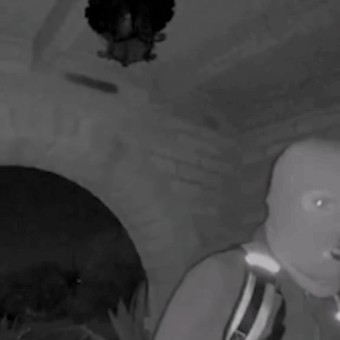
For weeks, the case lived mostly in sketches and speculation: a beloved mother missing, a quiet neighborhood, and an uncooperative camera. That changed when the FBI released a surveillance image of a person of interest, captured near the time and place of Nancy’s disappearance.
The image does not show a face in sharp detail. It shows a figure dressed for anonymity, moving with purpose near the area of her home. No license plate is publicly attached, no obvious identifying logo or tattoo. Yet the decision to make the photo public shattered whatever certainty remained about this being a private, containable situation.
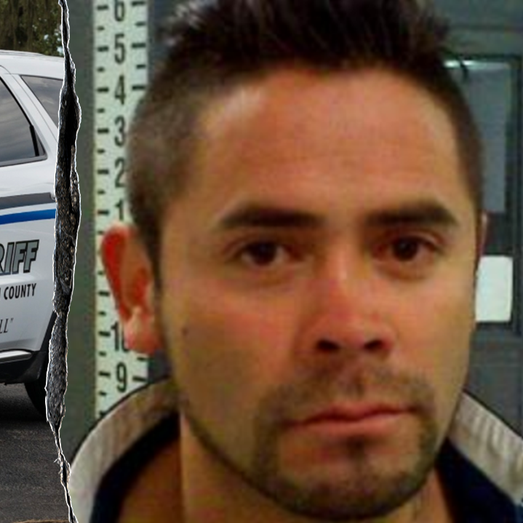
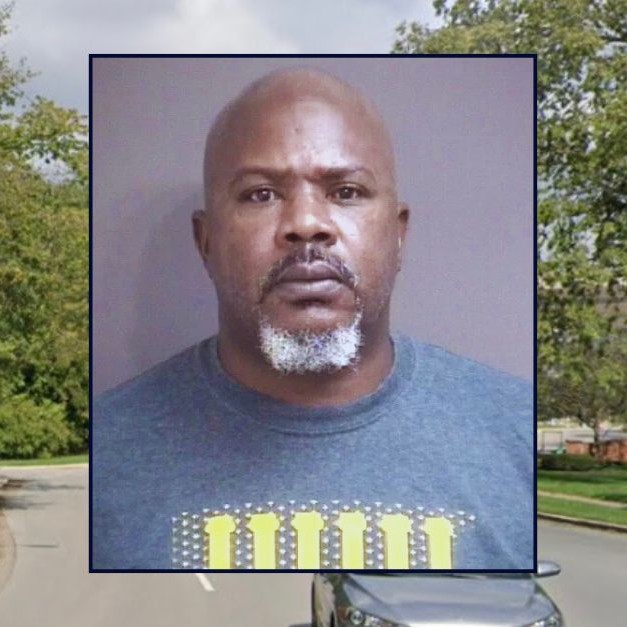
Person detained for questioning in disappearance of Nancy Guthriehttps://t.co/z3pgdL9pH4 pic.twitter.com/YiRXI35JKY
— KSHB 41 News (@KSHB41) February 11, 2026
When federal agents elevate a single frame of video to national distribution, it signals a shift in strategy. The net expands from concentric circles of acquaintances, neighbors, and known associates to anyone who might recognize a tilt of the shoulders, a stride, or a favored brand of clothing. The subject of that image moved from an unknown passerby to the closest thing the case has to a lead character.
Familiarity With Cameras
Beneath the grainy image, another detail keeps circling back. The person who moved through that space appeared to understand where the cameras were and how to avoid, limit, or neutralize them.
The missing front-door footage is not a passive technical failure. The doorbell unit had been physically manipulated. In many residential blocks, security cameras overlap without coordination, each homeowner angling a lens across driveways, sidewalks, and property lines. Yet, so far, the publicly released material centers on one elusive subject, not a trail of clear captures.
That pattern suggests an offender comfortable in environments wired for recording. It implies either prior scouting of the property or an existing familiarity with Nancy’s home. Walking into a camera’s blind spot by luck is conceivable. Doing it while the one device that should have captured an approach happens to drop offline is harder to write off as a coincidence.
Modern biometric tools further raise the stakes. High-resolution imagery can extract facial geometry, gait signatures, and other identifiers from fragments that once would have been useless. Investigative emphasis on the released frame, rather than its quality, hints at what may be embedded in the pixels rather than what a casual viewer can see.
Everyone Under Suspicion
The investigation has unfolded under a harsh premise: everyone in Nancy’s orbit remains under scrutiny. Relatives, friends, and those associated with her church community have all been described as potential suspects. It is a blunt posture that reflects both the statistical reality of interpersonal crime and the uneasy specifics of this case.
Nancy was not plucked from a remote highway or a bar parking lot after midnight. She vanished from her home territory, with no clear sign of forced entry or struggle broadcast to the block. To move a person out of that environment without drawing attention often requires either deception, trust, or an overwhelming, rapid application of force.
Trust points inward. Deception usually leverages familiarity. Force leaves traces. The investigation’s visible intensity around Nancy’s inner circles speaks to how little room the facts leave for a tidy, faceless explanation.
Borderline Theories
Tucson sits less than a hundred miles from the Mexican border, and the region lives with a constant background hum of trafficking, smuggling, and cross-border criminal circuits. Early on, the possibility that Nancy had been targeted in a cross-border kidnapping surfaced as a working theory. The scenario fit a certain template: a sudden disappearance, no immediate ransom demand made public, and a metropolitan area tied into interstate routes.
Yet the focus on a single individual in the surveillance image bends that narrative. Organized crews tend to operate in teams, with drivers, lookouts, and handlers. A one-person operation, threading a neighborhood camera grid, tampering with a doorbell unit, and removing a victim within a 41-minute span does not align neatly with that model.
If the person in the image acted alone, the border becomes less a central theme and more a potential escape route. That shift tightens attention back on the personal. Instead of cartel logistics and international networks, questions return to who in Nancy’s life knew her movements well enough to exploit them and was confident enough to move solo.
The Technology Squeeze
The case sits at an intersection of analog behavior and digital exposure. On the surface, the abduction reads like something from an earlier era: a victim taken from her home, a compromised camera, a quiet street. Underneath, almost every element generates data.
Phones ping off towers. Vehicles with trip license plate readers on arterial roads and at border crossings. Smart devices log when they go offline, reboot, or reconnect. Neighborhood security platforms aggregate camera feeds. Even the act of disabling a doorbell camera leaves a timestamped absence.
The FBI’s decision to spotlight the image rather than a composite sketch reflects that new balance. The frame is not only a plea for public recognition. It is also a signal that the subject’s movements through a web of sensors are traceable if the right pattern is unlocked. A slight change in clothing between one camera and the next, a vehicle that appears twice in a morning where it never appears otherwise, or a phone that went into airplane mode during the critical minutes can all compromise anonymity.
For whoever appears in that image, the open question is not just whether someone will recognize them. It is whether any device they used that morning already has.
A Case That Refuses to Settle
Publicly, the picture remains incomplete. Nancy is still missing. No arrest has been announced. No definitive narrative has emerged to explain what happened inside that 41-minute window. The image release sharpened focus but did not settle the central questions.
Was the person in the frame someone Nancy knew, or a stranger who had watched her from a distance long enough to map her routines? Did that subject approach the house under a pretext that made sense to her, or force an entry she never saw coming? Was the camera tampering improvised on the spot, or carried out during an earlier visit that blended in as ordinary?
Investigators continue to work those questions against a shrinking margin for error. Time erodes memories, scatters witnesses, and gives anyone responsible for Nancy’s disappearance more chances to cover tracks. At the same time, it grants technology more time to surface leads buried in the noise of a city.
Somewhere between those two clocks, a single image bears the weight of a case. Until Nancy is found, that blurred figure walking through a Tucson morning remains the closest thing to an answer, and the most visible reminder of how much no one outside the investigation knows.
References
- Fox News: What Timing FBI’s Image Release Suggests in Nancy Guthrie Case
- Fox News: What To Know About Nancy Guthrie’s Family as Sheriff Says Everybody’s Still a Suspect
- Fox News: FBI Nancy Guthrie Billboard Campaign Aims for Crucial Piece of Information
- Fox News: 41-minute timeline in Nancy Guthrie case raises red flags from ex-homicide detective