



Inside a Little Havana discount store, the official story calls it an accident with no foul play, even as an autopsy logs bruises, a locked walk-in freezer, and a body found naked in an employee area.
TLDR
A 32-year-old anesthesiologist was found dead in a Miami Dollar Tree freezer; her family seeks $50 million, arguing basic safety and search steps failed.
The dead woman is 32-year-old Helen Massiell Garay Sanchez, a Florida anesthesiologist, mother of two, and Nicaraguan immigrant who never walked out of a Dollar Tree on Southwest 8th Street on the night of December 14th, 2025. Hours later, staff and officers opened a walk-in freezer in the restricted back room and found her inside, lifeless and unclothed.
A Doctor in a Locked Store
The December night began in an unremarkable way. A neighborhood Dollar Tree in Little Havana prepared to close, its aisles half empty, its fluorescent lights buzzing over last-minute shoppers. At some point before doors were locked, Sanchez entered the store. Cameras captured her coming in, then drifting away from the sales floor, deeper toward the back.
There was no final purchase at the register, no exit past the sliding doors. Instead, the trail leads through a stockroom and into a walk-in freezer in an employee-only area. When the storefront lights eventually went dark, Sanchez remained out of sight, sealed behind an insulated door where no one was supposed to be.
What happened between the moment she stepped off the public floor and the instant the latch closed remains the hole at the center of this case. No one has publicly described any struggle inside that freezer. No witness has surfaced to explain why a highly trained physician, used to high-stakes operating rooms, ended up trapped, alone, and exposed in the back of a discount chain.
Inside the Walk-in Freezer
The autopsy offers the first hard edges. The medical examiner lists environmental hypothermia as the cause of death, with ethanol use as a contributing factor. Toxicology puts her blood ethanol level at 0.112 percent, above the state driving limit. In the cold, that level matters. Alcohol can dull judgment, slow reaction times, and widen the gap between danger and the awareness of it.
Details on the cause of death for Florida woman found in a Dollar Tree freezer. Full story: https://t.co/h9D1I77ATx pic.twitter.com/S76etqR7MM
— Complex (@Complex) February 12, 2026
Her body also told another story. Examiners noted blunt force injuries, with contusions on her left forearm, left hand, hips, buttocks, and lower extremities, and abrasions on her abdomen, left arm, and legs. In the sterile language of a report, those marks hint at movement in a confined space, impacts against hard surfaces, or attempts to force a way out.
Freezers in commercial back rooms are supposed to anticipate panic. Standard safety expectations include internal releases, latches, or alarms that let a person push their way back into breathable air. The civil case surrounding Sanchez focuses on that door in particular, on whether the freezer was faulty, whether customers could reach it at all, and whether the space met even the most basic expectations for a place where a human being might be trapped.
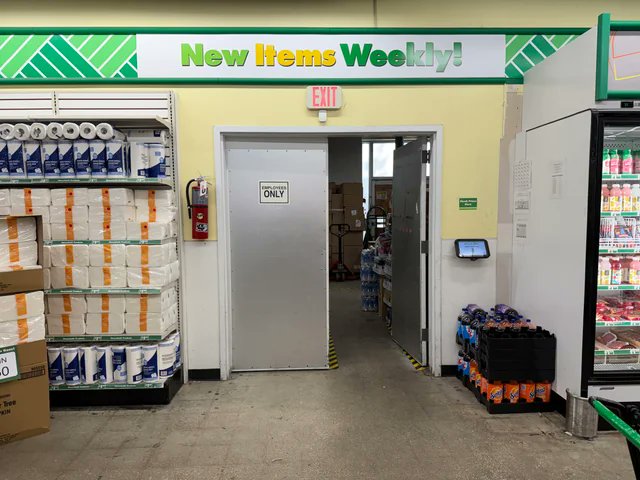
By the time help arrived, it was too late. An employee placed the emergency call, reporting a dead woman inside the business, in the freezer. On the radio traffic that night, a dispatcher described a naked woman found in the cooler of the store. Officers entered the back area and opened the freezer, finding Sanchez in a space that was never meant for customers.
A Lawsuit Built Around Minutes
In the weeks that followed, the narrative inside official paperwork diverged from the one forming inside her family. The death was categorized as involving no suspected foul play. Yet a wrongful death suit now presses a much harsher interpretation of what happened between Sanchez walking in and staff locking the doors.
The civil complaint, filed in Miami-Dade court, seeks $50 million in damages. The targets are Dollar Tree and the store manager on duty, named as responsible for what unfolded that night. The case frames the store as a place that invited customers in, then failed to do the simplest thing when one of them vanished into the back: check the cameras, search the rooms, and make sure no one was left inside before the key turned in the lock.
At the center of the suit is a single disputed moment near closing. A concerned customer asked the manager to review surveillance footage to see whether Sanchez had ever left. Instead of freezing the chaos and rewinding the night, the manager allegedly instructed an employee not to touch the surveillance system. The timeline continues toward midnight with no systematic search, no alarm raised about a missing woman whose car still sat outside.
The counts in the case read like a checklist of precautions that never happened. No thorough sweep of aisles and back rooms before closing. No enforced closing time procedures to ensure that all invitees, including Sanchez, had exited the store. No internal emergency release, latch, or alarm inside the walk-in freezer to prevent entrapment. A dangerous instrumentality, open to customers in spite of being an employee area, left without safeguards.
Each of those points turns minutes into potential liabilities. If someone had rewound the recording when Sanchez was first reported missing, her path toward the back storage room could have been visible. If employees had been trained to physically inspect every nonpublic space before closing, the freezer door could have opened while she was still alive. If the freezer had an obvious internal release or alarm, bruises on her limbs might have been nothing more than the aftermath of a panicked push to escape.
Corporate Risk and Human Cost
The case against Dollar Tree is not about a single faulty door in a single Miami store. It raises a broader question for any chain that runs on thin staffing and tight profit margins. How many locations keep walk-in freezers, stockrooms, and restricted corridors in easy reach of customers, without clear barriers or supervision, in the name of efficiency?
A walk-in freezer is not a theoretical danger. Temperatures inside can drop far below freezing, and the human body loses heat rapidly on metal floors and against insulated walls. An unclothed person, already impaired by alcohol, can slide into hypothermia in a matter of hours. The autopsy on Sanchez makes that progression concrete, turning abstract corporate duty into a description of how a living woman cooled, minute by minute, into a body.
Outside legal filings, Sanchez is not just a case caption. A crowdfunding page created for her family describes a woman who built a career in anesthesiology, specializing in congenital heart disease, working with children whose lives depended on small, precise decisions. The same page paints a portrait of a mother whose two children remained in Nicaragua, thousands of miles away from the Little Havana strip mall where she died.
For those children, the Miami freezer is not an accident scene but the point where their futures split. The lawsuit argues that a corporation failed them before they ever set foot in the United States, by treating a walk-in freezer as a piece of equipment rather than a hazard that needed clear, enforced rules.
Corporate Silence and Unanswered Questions
Key questions still hang over the case. Why was a member of the public able to reach an employee-only freezer in the first place? What, precisely, failed on that door on the night of December 14th, 2025? Where are the missing minutes between Sanchez walking into the store and the last click of metal behind her?
There is also the unresolved tension between the early conclusion that no foul play was suspected and the physical evidence of bruises and abrasions scattered across her body. Those injuries may match a frantic effort to escape, slipping and striking cold surfaces in the dark. They may also be consistent with other scenarios that no one has yet fully mapped out in public. The classification of the death leaves room for questions that a civil jury may be forced to confront in sharper relief.
The company now stands in the crosshairs of a lawsuit that translates those questions into dollar figures and counts of negligence. Discovery, if it moves forward, could expose surveillance footage, internal emails, maintenance records for the freezer, and training materials for closing time procedures, or the lack of them. Each of those documents has the potential to either support the official early framing or to unravel it.
For now, a doctor is still gone, a family in two countries waits for answers, and a multinational chain confronts the possibility that one small, cold room in a Miami store may become the stage for a very public reckoning. Until a courtroom forces a final version of events into the record, the walk-in freezer on Southwest 8th Street remains less a fixture of retail logistics and more a locked box of unanswered questions.
References