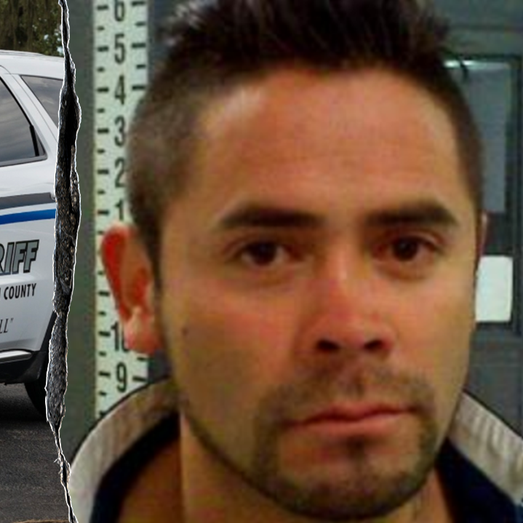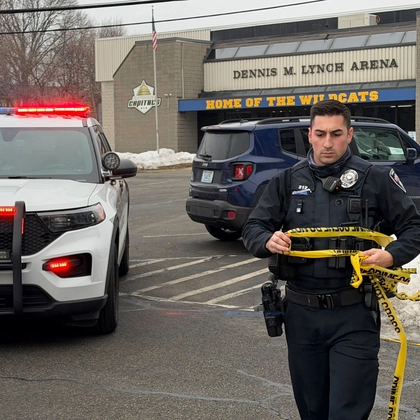



By the time jurors heard Alex Murdaugh’s voice on the grainy kennel video, his earlier story about being nowhere near his wife and son had already started to fray. The clip lasted less than a minute. The fallout from it will last the rest of his life.
TLDR
South Carolina attorney Alex Murdaugh was convicted of murdering his wife, Margaret, and son, Paul, at the family estate and received two consecutive life sentences after a trial centered on a tight timeline, financial pressure, and a kennel video that undercut his alibi.
The killings unfolded on June 7th, 2021, at Moselle, the Murdaughs’ rural hunting property in Colleton County. Margaret and 22-year-old Paul were found shot near the dog kennels, their deaths closing in on a prominent legal dynasty that had once dominated the region’s courtrooms. Two years later, a Colleton County jury found Alex Murdaugh guilty on all murder and weapons charges, even as questions lingered over missing weapons, sloppy crime scene work, and whether anyone else was involved.
The Night at Moselle
Shortly after 10 p.m. on June 7th, 2021, a frantic 911 call reported two bodies at the Moselle property. Responders arrived to find Paul lying in the doorway of the feed room at the kennels, killed by shotgun blasts at close range. Margaret was nearby, dead from multiple rifle wounds on a patch of grass by the dog cages.
The scene mixed wealth and violence. A sprawling estate, dogs barking in the dark, blue lights cutting across open fields. Shell casings marked the ground. Tire tracks and footprints crossed in the mud. Word spread quickly that the victims were members of the Murdaugh family, a name that had carried weight along South Carolina’s Lowcountry for generations.
From the start, Alex Murdaugh presented himself as a grieving husband and father who had stumbled onto the aftermath. He placed himself at the main house, said he had left the property to visit his ailing mother in nearby Almeda, then returned to find Margaret and Paul already dead. The gunman or gunmen, he implied, were long gone.
In those first days, attention was fixed on enemies tied to Paul’s pending boating under the influence case, where a 2019 crash had killed 19-year-old Mallory Beach. The idea of revenge fit the public narrative. It did not fit the data that slowly emerged.
An Alibi Undercut by a Kennel Video
The trial would turn on minutes, not hours. Digital records from phones and vehicles later placed a tight frame around the shootings, narrowing the time when Margaret and Paul were alive to a small window before 9 p.m.
At the center was a video on Paul’s phone, recorded at the dog kennels at 8:44 p.m. Three familiar voices can be heard in the background discussing a friend’s dog. For months, Alex Murdaugh insisted he had not been at the kennels that night, placing himself instead at the main house and then on the road to his mother’s home.
Once the video surfaced, that claim collapsed. Family friends and co-workers identified Alex’s voice on the recording. Forced to adjust, he took the stand and, for the first time, admitted he had been at the kennels shortly before the murders.
That admission created a new problem. If he was at the kennels at 8:44 p.m., then gone by the time Margaret and Paul’s phones locked for the last time minutes later, the margin for a mysterious shooter to arrive, kill both victims, and disappear without leaving a clear trace shrank to nearly nothing.
Vehicle data added more pressure. Information from his SUV showed a flurry of short trips and sudden accelerations around the critical period. Phone records reflected abrupt silences and odd gaps. The neat story about a peaceful visit with his mother looked less like a routine errand and more like a movement in the shadow of the crime.
Financial Ruin and a Motive in Freefall
Even with the video and timeline, the case remained circumstantial. There were no surviving eyewitnesses to the killings, no recovered murder weapons, and no confession to the shootings themselves. The prosecution’s answer was a motive built from years of financial misconduct.
By the summer of 2021, Alex Murdaugh’s finances were collapsing. Millions of dollars in alleged theft from clients and his law firm hung over him. On the same day as the killings, a colleague confronted him about missing settlement funds. A hearing loomed in the Mallory Beach boating lawsuit, threatening to open his books and expose his finances in open court.
Jurors heard about stolen fees from vulnerable clients, a housekeeper’s wrongful death settlement that never reached her family, and a pattern of borrowing from one account to plug holes in another. The portrait was of a man who could no longer keep his story straight on the balance sheet.
The theory presented in court was blunt. Margaret and Paul’s deaths would buy time, redirect sympathy, and pause the financial reckoning. The boat case would be delayed. The law firm would have a grieving partner instead of a suspected thief. Questions about money might be set aside in the shadow of tragedy.
Alex Murdaugh admitted under oath that he had stolen from clients, lied to partners, and abused pills. He denied, again and again, that he had killed his wife and son. For some jurors, the same capacity for deceit that fueled the thefts pointed back toward the kennels.
Inside the Courtroom and the Verdict
The five-week trial in early 2023 unfolded under cameras, bright lights, and relentless scrutiny. For a man who had spent his life on the powerful side of the courtroom, the reversed roles were stark. He now sat at the defense table, flanked by attorneys, as former colleagues, friends, and even family members detailed his lies.
Crime scene technicians walked jurors through blood patterns, trajectory analyses, and photographs from the kennels. Disputed expert testimony over spatter on a white T-shirt raised arguments over how close the shooter would have been to Paul. Gun experts linked shell casings at the scene to weapons owned by the family, including a .300 Blackout rifle favored for hunting hogs on the property, but the rifle used to kill Margaret was never recovered.
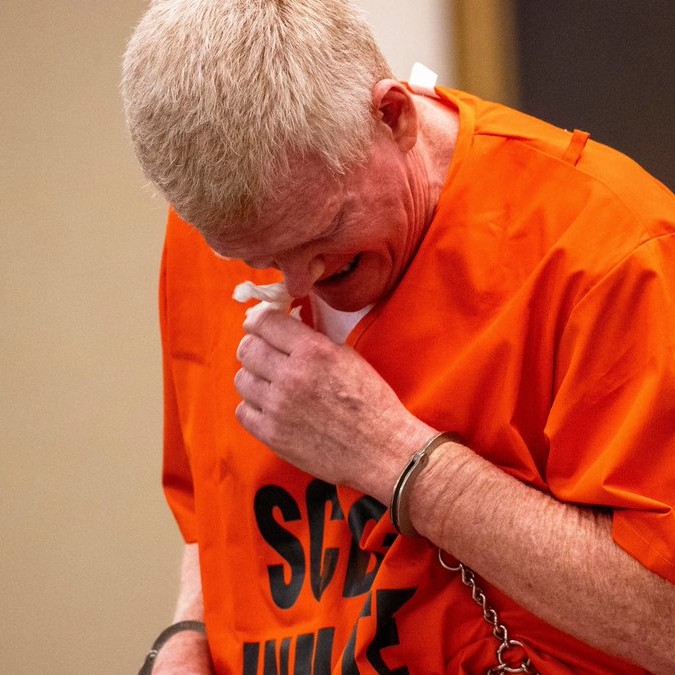
Alex Murdaugh’s decision to testify added another layer. He acknowledged years of deception, blamed opioid addiction, and called himself a liar while asking jurors to believe him on the one point that mattered most. He sobbed on the stand and insisted, over and over, that he loved his family and would never harm them.
After closing arguments framed the case as either a calculated cover-up or a rush to judgment, the jury deliberated for less than three hours. On March 2nd, 2023, the foreperson announced guilty verdicts on both murder counts and two related weapons charges.
At sentencing the next day, the judge imposed two life sentences to be served consecutively. The former prosecutor and civil litigator, whose family name had filled the local courthouse walls for nearly a century, left the courtroom in a prison jumpsuit, not a tailored suit.
Unanswered Questions After a Life Sentence
The verdict did not resolve everything around Moselle. The rifles and shotgun used in the killings have never been recovered. No independent witness placed a weapon in Alex Murdaugh’s hands that night. The possibility of another person on the property remains a point of argument in defense filings.
Questions also linger over the quality of the early investigation. Tire tracks were not fully preserved. Potential footprints and fingerprints went undocumented or were compromised. The scene around the kennels shifted as more responders arrived, unintentionally disturbing evidence in the dark and confusion.
Beyond the double murder, a constellation of other deaths and alleged schemes orbits the Murdaugh name. The unsolved 2015 death of teenager Stephen Smith on a rural road, the 2018 death of housekeeper Gloria Satterfield after a reported fall at Moselle, and the staged roadside shooting of Alex himself in 2021 all remain under separate scrutiny, civil litigation, or review.
Alex Murdaugh continues to insist he didn’t kill wife and son as he gets another day in court https://t.co/74JTVKcu5q https://t.co/74JTVKcu5q pic.twitter.com/shka8x2v8s
— ABC7 News (@abc7newsbayarea) February 12, 2026
Appeals in the murder case contend that the trial court allowed too much financial crime evidence and that the intense publicity made a fair trial impossible. Supporters of the verdict point back to the kennel video, the tight timeline, and his own admissions about lying in the immediate aftermath.
What happened near those kennels in the final minutes before Margaret and Paul died is now fixed in the law as a double homicide carried out by a husband and father. On the ground at Moselle, where the property has since been sold, and the kennels stand as mute structures in a field, the absence of recovered weapons and the echo of that short, shaky video keep the story from ever feeling fully finished.
References