



At 7:19 p.m. on February 4th, 2026, a 24-year-old mother in Wisconsin was heard begging for her life, a frantic voice on a phone line saying, “Please don’t shoot me, I’m sorry.” Minutes later, the call went dead, the phone went dark, and the official timeline that followed started to fracture.
TLDR
On February 4th, 2026, Gabriella Cartagena called her mother and pleaded, “Please don’t shoot me.” Days later, she was found dead in Michigan, and her boyfriend, Robert Chilcote, was arrested in Minnesota and now faces charges linked to her death.
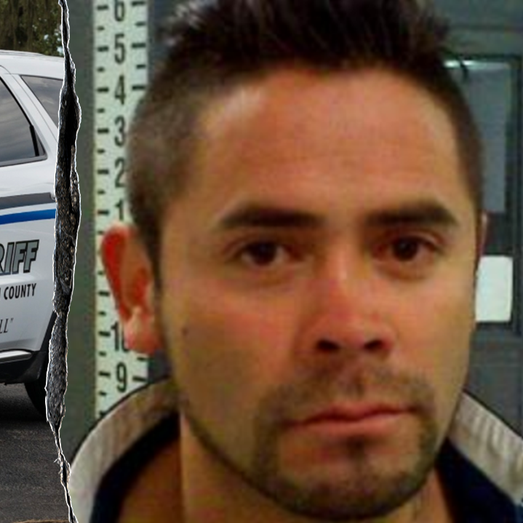
The woman on that call was Gabriella Cartagena, a 24-year-old from Marinette, Wisconsin. She was last seen that same day, reportedly heading to Red Arrow Park with her boyfriend, 29-year-old Robert Chilcote. Within 48 hours, Cartagena was missing, Chilcote was in handcuffs three states away, and search teams were combing woods in northern Michigan for a body they already seemed to expect to find.
A Final Call From Red Arrow Park
The last verified trace of Cartagena alive came through her own phone. Location data placed the device at Red Arrow Park in Marinette around the time of the desperate call to her mother on February 4th. The words she spoke were specific, not vague distress, not confusion. They were a clear acknowledgment of a gun, of imminent harm, and of someone else in control.
Cartagena’s family had already been worried about her relationship. That night, they believed she was with Chilcote at the park, a public space on the edge of town that turns quickly from open and visible to dark and empty once night falls. By the time relatives dialed 911, they were reporting not just a missing person, but a crime in progress that no one had managed to witness.
Officers converged on Red Arrow Park. On the ground, they found what they later described as possible blood and other disturbances. No body, no weapon, no suspect. A scene that hinted at violence without answering the simplest question: if she was shot there, where did she go?
The Prius, the Flight, and the First Arrest
While Marinette wrestled with a crime scene that did not yet have a name attached to it, law enforcement networks across the region began sharing Chilcote’s identity and the car he was believed to be driving, a red Prius that suddenly became the most hunted compact in the upper Midwest.
On February 5th, that search made contact in Wright County, Minnesota, several hundred miles from Red Arrow Park. Deputies there were alerted that Chilcote was a person of interest in an aggravated assault and possible homicide. They were told to look for the Prius. When they finally spotted it, the stop began quietly. Chilcote pulled over. For a brief moment, it looked like he would surrender without incident.
Then the door stayed shut. The engine stayed on. Seconds later, the Prius shot forward, and the quiet traffic stop turned into a 16-minute chase through Minnesota roads at speeds reaching 100 miles per hour. Deputies deployed stop sticks. Chilcote swerved, tried to avoid them, and instead drove over a median and into a stop sign. The car was disabled. The man at the center of the search was finally pulled from the vehicle and arrested.
The charges in Minnesota were immediate but narrow. Chilcote was booked for fleeing a peace officer and as a fugitive wanted in another state. Bail in Wright County was set at $100,000, but the bigger questions trailing him across state lines were not yet charged: Where was Gabriella? What had happened in that park in Marinette?
A Body in the Woods and a Quiet Belief
For days after the chase, the investigation stretched across three states. Detectives from Marinette traveled to Minnesota to question Chilcote while he sat in jail there. At the same time, teams began following the path he had taken between Wisconsin and the point where the Prius crashed. The focus shifted north, toward Michigan.
On February 10th, searchers found what the final phone call had already promised. In a wooded area of Menominee County, Michigan, not far over the state line from Wisconsin, they discovered a body. The remains were identified as those of Gabriella Cartagena.
New information on Gabriella Cartagena’s death and how she was found, and her boyfriend’s arrest in Minnesota https://t.co/pBLGqazMIz pic.twitter.com/IJYacL8maN
— WBAY-TV 2 (@WBAY) February 12, 2026
By the time officials went public, their working theory was blunt. The killing had taken place in Red Arrow Park in Marinette. Afterward, Cartagena’s body had been moved out of Wisconsin, driven north, and left in remote Michigan woods. The alleged crime scene and the body were now separated by state borders, different jurisdictions, and different court calendars.
The choice of that wooded dump site created a legal and logistical maze. Any homicide prosecution would have to reckon with a killing believed to have occurred in Wisconsin, a body recovered in Michigan, an arrest made in Minnesota, and a suspect already facing charges in more than one court. Every border crossed in those days between the phone call and the discovery of the body added another layer of delay.
From Missing Person to Charging Documents
Back in Marinette County, the case shifted from search to prosecution. The district attorney’s office sought Chilcote’s extradition so he could be returned to Wisconsin to face charges connected to what happened to Cartagena. The first announced count was aggravated battery, a serious felony that falls short of homicide but anchors the state’s jurisdiction over the violence that unfolded.
Prosecutors signaled that more charges were likely, but they were waiting on one crucial piece: the autopsy. The examination was expected to determine the precise cause of Cartagena’s death, the presence or absence of gunshot wounds, and any timeline clues hidden in her injuries. Those details would shape whether the next wave of filings would include homicide counts and, if so, which ones.
Once extradited and booked into the Marinette County Jail, Chilcote’s bail was expected to jump to $500,000 cash, five times higher than the amount set in Minnesota. That figure, steep for a small county, hinted at the level of danger investigators believed he posed, and at their determination not to see him back on the road between states again.
The Gaps Between What Is Known and What Is Proven
From the outside, the narrative looks disturbingly linear. A young woman meets her boyfriend at a park. She calls her mother and pleads with someone not to shoot her. Blood is found at the park. Days later, her boyfriend is found fleeing deputies. A week later, her body is recovered along his apparent travel route. The pieces fit too tightly for coincidence.
Yet in the justice system, the line between suspicion and proof is stubborn. The phone call captures only Cartagena’s voice, not the identity of the person holding the weapon. The blood and disturbances at Red Arrow Park tie violence to that location, but they do not record who caused it. The chase in Minnesota shows panic, evasion, and consciousness of guilt, but not which crime that guilt might be tethered to.
Even the body in the woods raises difficult evidentiary questions. How long had she been there when searchers found her? Was she killed immediately after the call, or was there a window of time in which something else happened? Did she die in the park, as investigators believe, or inside the car that carried her across state lines?
Each of those unknowns matters. They will determine which charges can be filed where, and which pieces of the story make it into a courtroom. For Cartagena’s family, they are also the brutal details that fill in the hours between a terrified plea over the phone and a knock on the door with confirmation of death.
A Family, a Child, and a Public Story
While investigators mapped routes and prosecutors drafted charging language, Cartagena’s family faced the practical reality of burying a daughter who died hundreds of miles from where she was found. Relatives launched a fundraising campaign to cover funeral costs and the travel they would need to stay present for the criminal case. In a brief public note, her brother wrote that she left behind a 3-year-old daughter.
That small detail shifts the story’s center of gravity. The child is too young to understand an interstate manhunt, too young to know what Red Arrow Park looks like at night, or to imagine her mother’s last words. She will grow up in the shadow of a phone call and a case file, dependent on the system’s willingness to keep answers from slipping across borders the way Chilcote allegedly did.
In Marinette and Menominee Counties, the case has already become a cautionary tale told in short, hard sentences. Do not ignore the first signs of trouble in a relationship. Do not meet in secluded parks at night. Do not assume that a missing person will turn up safe just because there is no body yet. But beneath those lessons lies a harsher truth. Cartagena’s family did everything they were supposed to do. They took the call seriously. They reported it. They pushed for action. The system still could not reach Red Arrow Park before the damage was done.
What Comes Next
The legal process now moves at its own pace, slower than the 16-minute chase, slower than the frantic calls that flew between three states once the phone line went silent. Extradition has to be finalized. Autopsy results have to be delivered. New charges, if they come, have to be drafted, filed, and fought over in hearings that will stretch on for months, possibly years.
Some details will finally be pinned down under oath. Others will die in the gaps between jurisdictions, or in a defendant’s right to remain silent. The one moment that is already fixed forever is the one that started it all, a 24-year-old’s voice over a phone line saying she did not want to die.
Whether the courts can ever fully account for what happened between that plea and the discovery of her body in Michigan remains an open question. For now, the case exists as a lattice of states, statutes, and silence, with a young woman’s final words still echoing at the center.
References