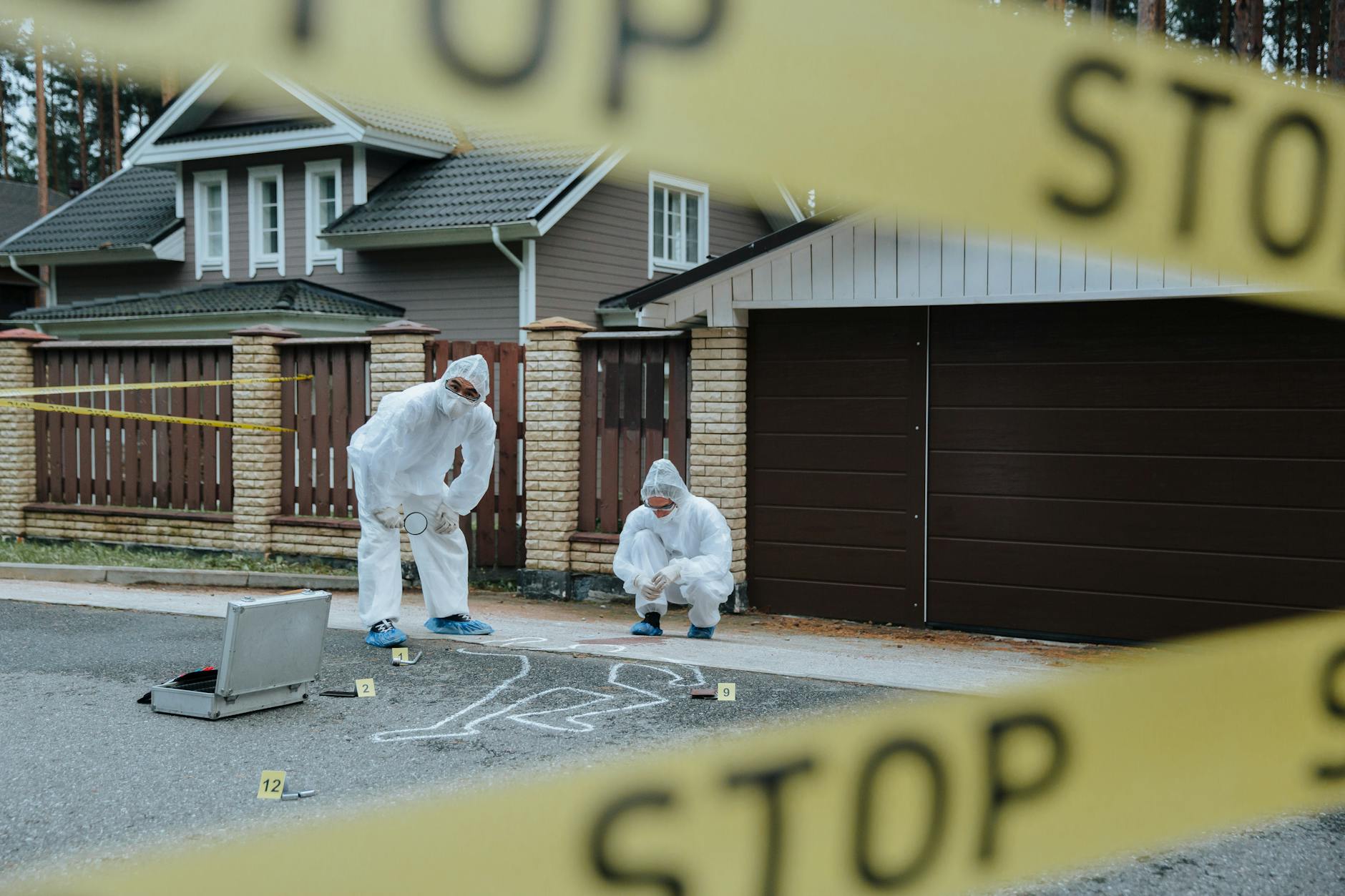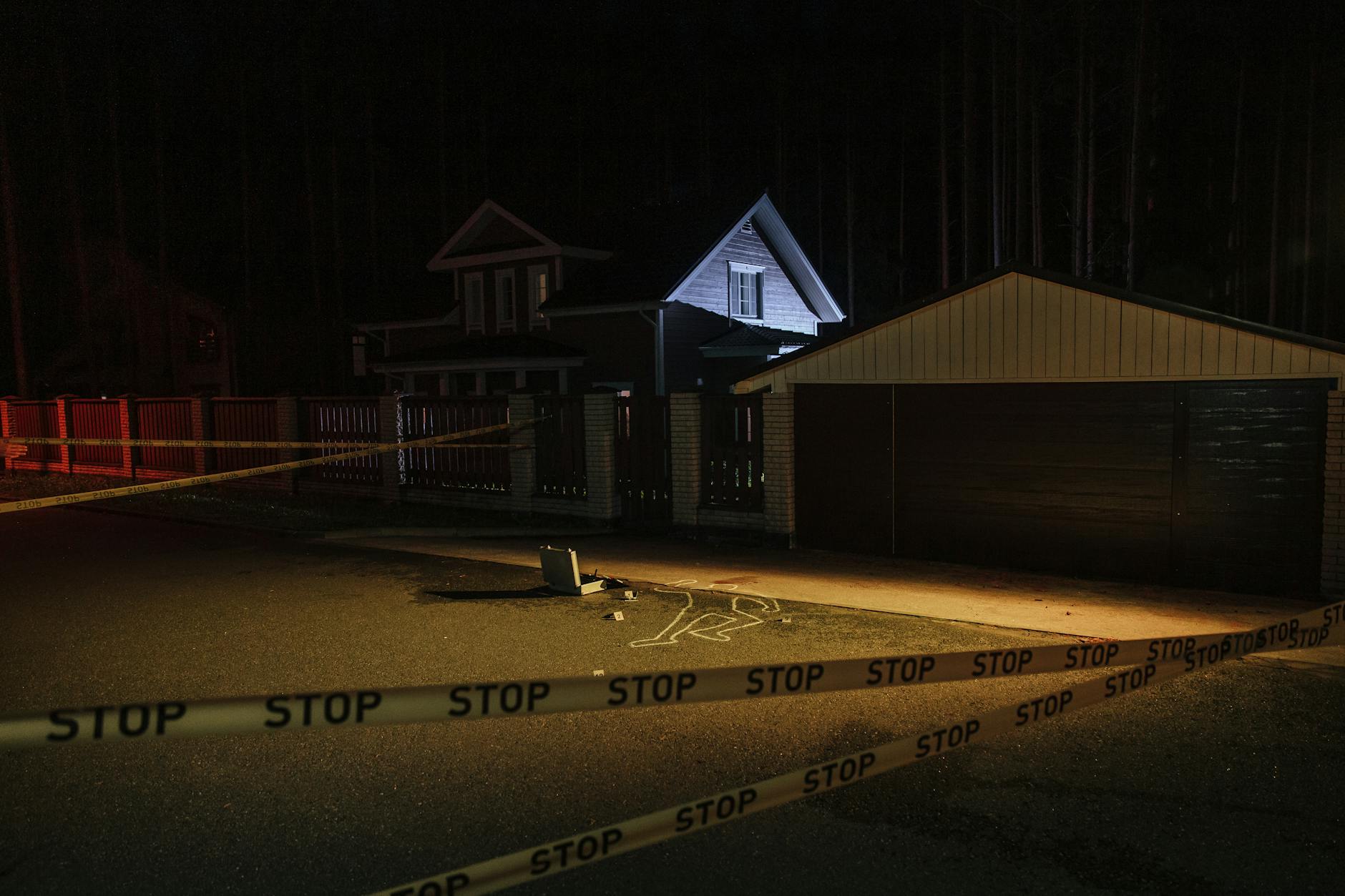




Case snapshot
Four University of Idaho students were stabbed to death in their off-campus home on November 13, 2022, while two surviving roommates slept downstairs. The killer moved through the house in the early morning hours, leaving behind a crime scene so brutal it shocked seasoned investigators. More than a month passed before police arrested Bryan Kohberger, a criminology doctoral student who lived just miles away.
The timeline of a quadruple homicide
The night of November 12, 2022, started like any other weekend in Moscow, Idaho. Kaylee Goncalves and Madison Mogen spent the evening at a local bar before stopping at a food truck around 1:40 a.m. Ethan Chapin and Xana Kernodle attended a fraternity party. All four returned to the three-story rental house at 1122 King Road by approximately 1:45 a.m.
Two other roommates were also home that night, sleeping on the first floor. They would survive.
Somewhere between 4:00 and 4:25 a.m., an intruder entered the house through a sliding glass door on the second floor. What happened next unfolded with horrifying speed. The attacker moved methodically through the home, stabbing all four victims multiple times as they slept. Kaylee Goncalves, 21, Madison Mogen, 21, Xana Kernodle, 20, and Ethan Chapin, 20, were all pronounced dead at the scene.
None of the victims called 911. The two surviving roommates heard nothing that triggered immediate alarm, though one later reported hearing what she thought was crying and a male voice saying, “It’s okay, I’m going to help you.” She also saw a figure dressed in black walking toward the sliding door. Frozen in fear, she locked herself in her room.
It wasn’t until nearly eight hours later, just before noon on November 13, that police received a call reporting an unconscious person. Responding officers found a scene of unimaginable violence.
A college town in shock
Moscow, Idaho, is home to roughly 25,000 people. The University of Idaho sits at its center, and violent crime is rare. The quadruple homicide shattered any sense of safety.
In the days following the murders, students fled campus. Parents pulled their children out of school. Vigils were held. The university hired additional security and offered counseling services, but fear spread faster than information. Police initially said there was no ongoing threat to the community, a statement they later walked back as the investigation continued without an arrest.
Kaylee Goncalves had just turned 21. She was weeks away from graduating and had recently landed a job in Austin, Texas. Madison Mogen, her best friend since sixth grade, was her roommate and constant companion. Xana Kernodle was a junior studying marketing. Ethan Chapin, her boyfriend, was visiting for the weekend and wasn’t a resident of the house. He was simply in the wrong place at the worst possible time.
The families of the victims became public faces of grief and frustration. Kaylee’s father, Steve Goncalves, gave interviews pushing for answers. He questioned the investigation’s pace and expressed anger over the lack of information being shared. The other families largely stayed out of the spotlight, but their pain was no less visible.
The investigation and the arrest
Moscow Police, the Idaho State Police, and the FBI launched a massive investigation. Tips poured in by the thousands. Investigators combed through hours of surveillance footage, tracked cell phone data, and interviewed hundreds of people. They cleared early persons of interest, including the two surviving roommates, a man seen on food truck footage with Kaylee and Madison, and Kaylee’s ex-boyfriend.
Weeks passed with no arrest. Public pressure mounted. Then, on December 30, 2022, police arrested Bryan Kohberger, a 28-year-old criminology Ph.D. student at Washington State University in Pullman, just 10 miles from Moscow.
Kohberger was pulled over in Pennsylvania, where he had driven home with his father for winter break. Authorities had been tracking him for days. An affidavit revealed the evidence that led to his arrest: DNA recovered from a knife sheath found at the crime scene matched Kohberger’s father through genetic genealogy. Cell phone records placed Kohberger near the King Road house multiple times before the murders, including the night of the attack. Surveillance footage captured a white Hyundai Elantra, matching Kohberger’s vehicle, in the area around the time of the killings.
One of the surviving roommates provided a description of the intruder she saw that night: a man approximately 5’10” or taller, athletically built, with bushy eyebrows. Kohberger fit the description.
The question of motive
No clear motive has been established. Prosecutors have not revealed why Kohberger allegedly targeted this house or these victims. There is no known connection between him and any of the four students, though investigators confirmed he was a regular at a local brewery where Madison worked. Whether they ever interacted remains unclear.
The lack of motive has fueled endless speculation. Some theorize Kohberger had been stalking one or more of the victims. Others point to his academic focus on criminology, suggesting a darker fascination with violence. His online presence revealed an interest in crime and criminal psychology, and he had posted a research survey seeking information about how criminals think and feel during offenses. The survey has since been removed.
Another contested detail involves the murder weapon. Police recovered a knife sheath at the scene, but the knife itself has never been found. The sheath bore a U.S. Marine Corps insignia and contained the single source of male DNA that led investigators to Kohberger. Despite extensive searches of his apartment, vehicle, and family home, no weapon has been located.
The defense has challenged the DNA evidence, the cell phone data, and the reliability of the surviving roommate’s description. They argue the evidence is circumstantial and that Kohberger was miles away at the time of the murders. The trial has been delayed multiple times as both sides argue over what evidence can be presented to a jury.
What happens next
Bryan Kohberger has pleaded not guilty to four counts of first-degree murder and one count of burglary. Prosecutors announced they would seek the death penalty. His trial, originally scheduled for October 2023, has been postponed multiple times and is now set for 2025.
The house where the murders occurred became a grim landmark. Students avoided walking past it. Flowers, candles, and handwritten notes piled up on the lawn. The university eventually purchased the property and announced plans to demolish it, citing its presence as a constant reminder of trauma. Demolition was completed in December 2023.
For the families of Kaylee, Madison, Xana, and Ethan, no trial outcome will bring their loved ones back. They have attended every hearing, watched every motion, and waited for answers that may never fully explain why this happened. The community of Moscow continues to grapple with a loss that redefined its sense of safety.
The case remains one of the most closely watched criminal proceedings in recent memory, not just for its brutality, but for the questions it raises about motive, evidence, and how a graduate student studying crime could allegedly become the subject of his own case study.
Where to dive deeper
- Podcasts: “Idaho College Murders Episode” (20/20)
- Podcast: “Idaho Student Murders” (“Dateline NBC”, NBC News)
- Podcast: “The Idaho Massacre” (“48 Hours”, CBS News)