

In most missing persons cases, investigators follow trails that go cold over days or weeks. The disappearance of Vivienne Cameron was different. Her case doesn’t hinge on a gradual fade into obscurity but on a window of time so narrow that every minute became critical. Somewhere between confirmed sightings and complete absence, Vivienne Cameron simply ceased to exist in any verifiable way.
What makes her case particularly haunting isn’t the absence of information. It’s the abundance of it right up until the moment she vanished. Unlike many who slip away gradually, their last hours reconstructed through uncertain memories, Vivienne’s final movements were documented, witnessed, and seemingly ordinary until they abruptly weren’t.
The Last Confirmed Movements
On an unremarkable Tuesday afternoon in March, Vivienne Cameron, a 34-year-old marketing consultant, left her downtown office at precisely 4:47 PM. Security footage captured her exiting through the main lobby, phone in hand, unhurried and unremarkable. She wore a navy blazer, dark jeans, and carried her distinctive burgundy leather bag, details that would later circulate in missing persons alerts across multiple jurisdictions.
At 4:52 PM, traffic cameras caught her walking east on Chancellor Street. At 4:56 PM, she purchased a bottle of sparkling water at a corner convenience store, confirmed by both receipt records and internal cameras. The clerk remembered her as pleasant but preoccupied, scrolling through her phone while waiting in line.
At 5:03 PM, two separate witnesses saw Vivienne entering Riverside Park through the north gate. Both described her walking with purpose, still looking at her phone. This is where certainty ends and questions begin.
The Missing Minutes
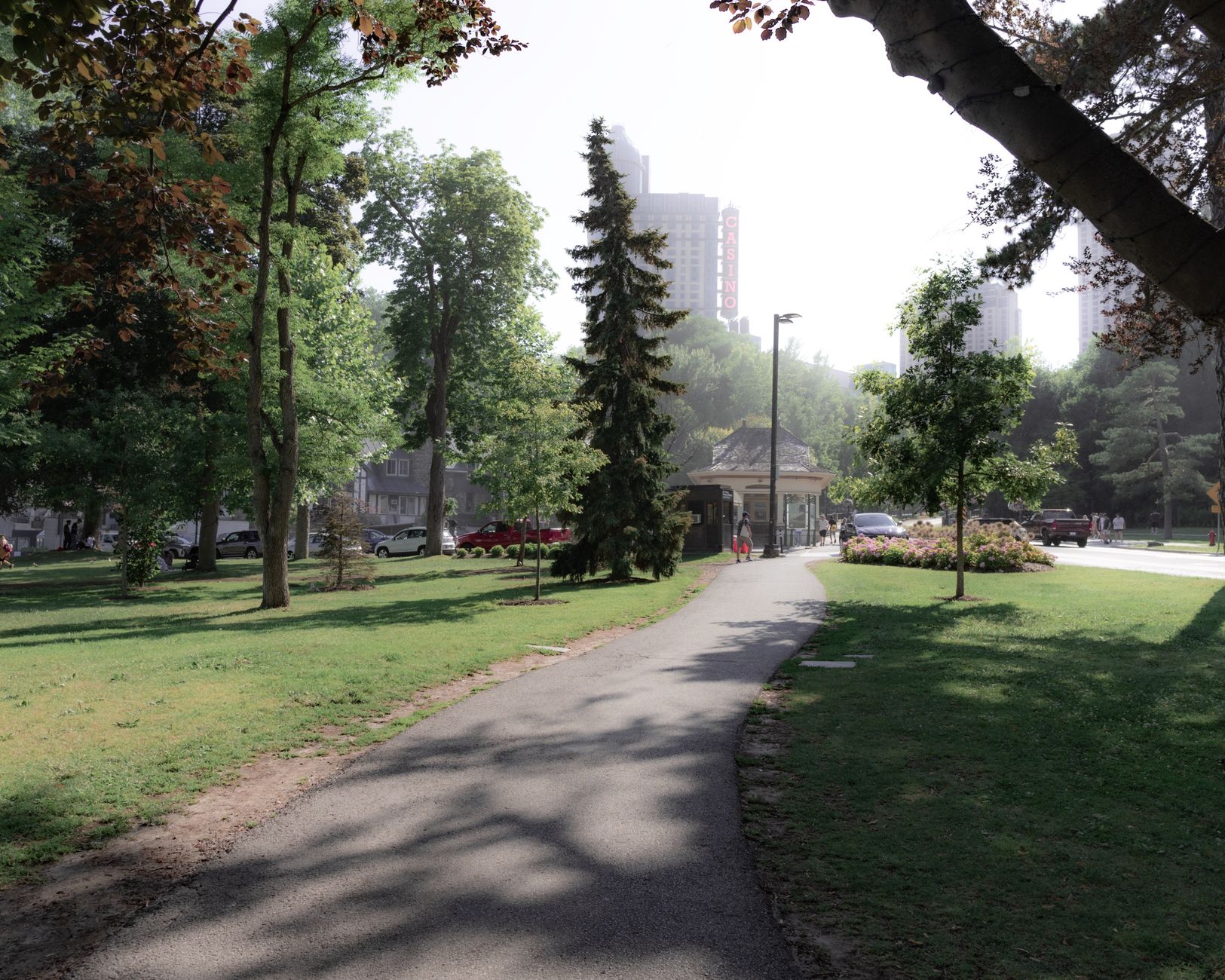
Riverside Park isn’t vast, roughly forty acres of maintained paths, open lawns, and scattered tree coverage. On a March afternoon with daylight holding and moderate foot traffic, it should have been difficult for anyone to simply disappear. Yet somewhere in the seventeen minutes between Vivienne entering the park and her phone’s last cell tower ping at 5:20 PM, she vanished completely.
The disappearance of Vivienne Cameron became a study in temporal forensics. Investigators reconstructed those seventeen minutes with obsessive precision, interviewing dozens of park visitors, examining every camera angle from surrounding buildings, and mapping sight lines and blind spots throughout the park.
Her phone’s digital footprint suggested she remained in or near the park during those minutes. The 5:20 PM ping came from a tower servicing the park’s southern edge. After that, her phone either powered down or was deliberately disabled. No further electronic trace of Vivienne Cameron has ever been detected.
The Unfinished Trail
What investigators found in those seventeen minutes was simultaneously too much and not nearly enough. At 5:09 PM, a jogger passed a woman matching Vivienne’s description on the central path, heading south. At approximately 5:14 PM, a dog walker noticed someone in a navy jacket near the pond area. At 5:18 PM, a parks maintenance worker saw a woman sitting on a bench overlooking the water, alone, checking her phone.
Each sighting was consistent with Vivienne’s appearance and timeline. None provided a definitive answer about what happened next. The bench where she was last observed sat in a relatively exposed area, visible from multiple angles. Yet no one saw her leave. No one witnessed an altercation, a meeting, or any interaction remarkable enough to remember.
The investigation revealed that the park’s south exit, the direction her phone ping suggested she moved, had no camera coverage. A gap in surveillance that on any other day would have been meaningless became, in retrospect, critical. If she left through that exit, she entered a two-block radius with limited camera coverage, multiple commercial doorways, and access to parking areas and side streets.
Leads That Led Nowhere
In the days and weeks following her disappearance, investigators pursued multiple theories. Each initially promising, each ultimately inconclusive.
The Burner Phone Theory
Phone records revealed that Vivienne received a call from an unregistered number at 5:11 PM, lasting forty-three seconds. Attempts to trace the number hit immediate dead ends: a prepaid phone, purchased with cash, never used again after that single call. The working theory suggested a planned meeting, but with whom and for what purpose remained unknowable. Friends and family insisted they knew of no reason Vivienne would arrange such a meeting. Nothing in her background suggested involvement in anything requiring that level of secrecy.
The Relationship Angle
Standard procedure meant examining Vivienne’s personal relationships closely. She’d ended a long-term relationship four months prior, but both her ex-partner and his associates had verified alibis. Her dating app activity showed minimal recent engagement, and none of her matches reported ever meeting her in person. Co-workers described her professional relationships as cordial but not particularly close. The angle that solves many disappearances offered no traction here.
The Financial Investigation
Forensic accounting revealed a life of comfortable stability, not hidden crisis. No large withdrawals preceded her disappearance. No secret accounts emerged. No evidence of gambling debts, loans to questionable individuals, or financial pressure that might motivate voluntary disappearance. Her accounts have remained untouched since that Tuesday afternoon, a detail investigators view as increasingly ominous as time passes.
The Park Connection
Investigators examined whether the park itself held significance. Vivienne’s location history revealed she walked through Riverside Park occasionally, but not habitually. It wasn’t part of her regular route home. Why she entered the park that day, whether by plan or impulse, remains unknown. Detectives interviewed known offenders in the area and examined similar incidents in city parks. No pattern provided clarity.
Where the Trail Ends
Perhaps the most frustrating aspect of the disappearance of Vivienne Cameron is the lack of a clear point where the trail definitively ends. Most cold cases have an identifiable moment where evidence stops, where investigators can point and say “here is where we lose them.” Vivienne’s case offers no such certainty.
Did the trail end at the park bench at 5:18 PM? At the south exit where cameras couldn’t see? In those two blocks of limited surveillance? Or did she travel farther, her movements simply unrecorded, her path intersecting with someone or something that left no trace?
The compression of the timeline creates a paradox. Seventeen minutes shouldn’t be enough time for someone to vanish so completely. Yet it was. In urban environments, in daylight, surrounded by potential witnesses, people don’t simply disappear without leaving some thread to follow. Yet Vivienne Cameron did.
The Unanswered Questions
Years later, the case remains open but unsolved. Her family maintains a presence online, sharing updates and keeping her name in public awareness. Law enforcement periodically reviews the case file, hoping new technology or a fresh perspective might reveal what countless hours of investigation could not.
The disappearance of Vivienne Cameron serves as a stark reminder that not all mysteries announce themselves dramatically. Sometimes they happen in daylight, in public spaces, in minutes rather than hours. Sometimes the most documented moments in a person’s life lead directly to the most inexplicable absence.
Somewhere in those seventeen minutes, something changed. A decision was made, an encounter occurred, a path was chosen or forced. Until that something reveals itself, Vivienne Cameron’s case remains defined not by what investigators know, but by the impossibly short span of time they cannot account for and the question of where her trail truly ended.