

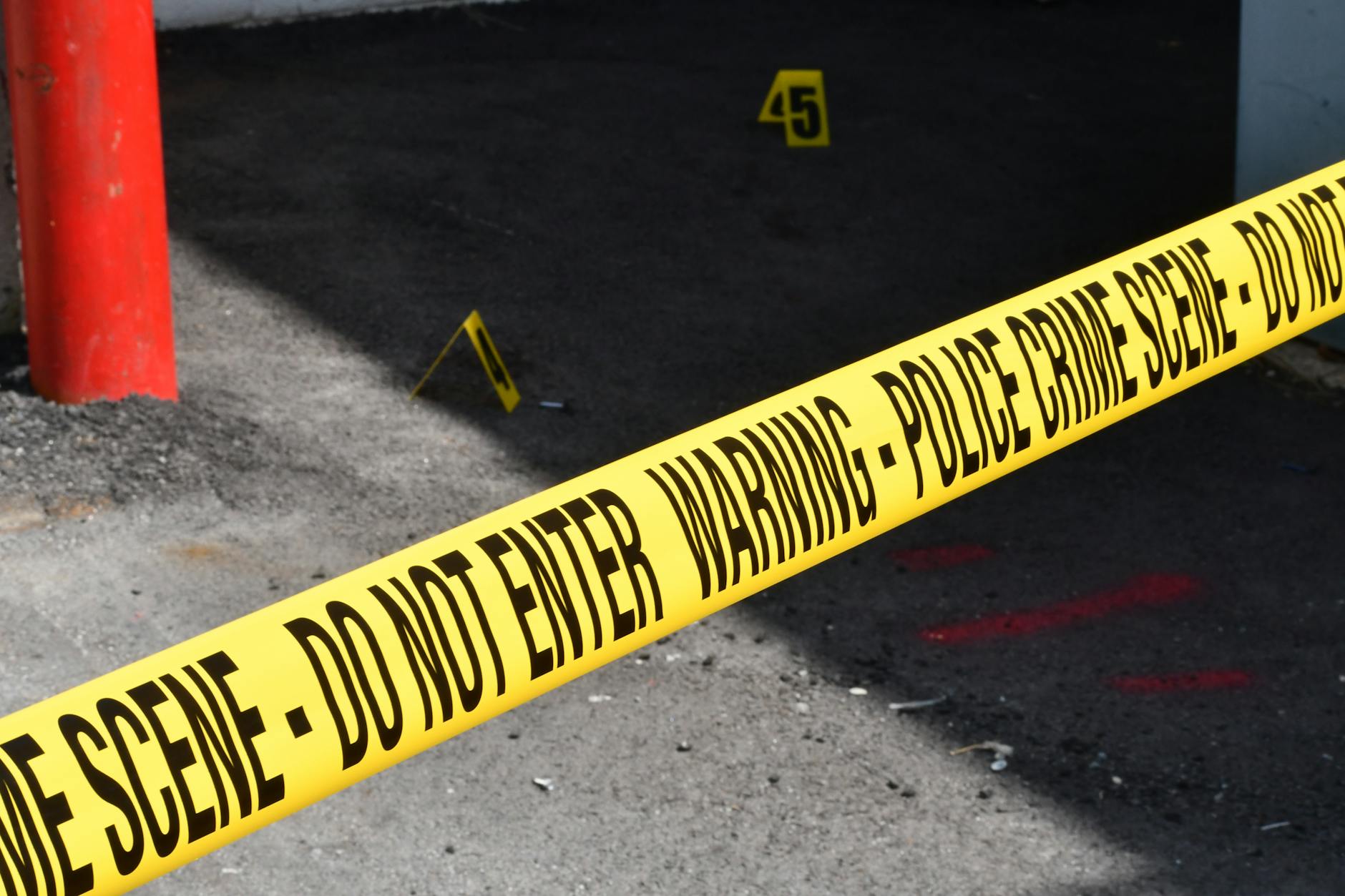
Case snapshot
On December 26, 1996, six-year-old JonBenét Ramsey was found dead in the basement of her family’s Boulder, Colorado home, eight hours after her mother reported her kidnapped. The ransom note, the body’s location, and the lack of forced entry turned what appeared to be an abduction into one of the most scrutinized unsolved homicides in American history. More than two decades later, the case remains open, defined by evidence that investigators still cannot reconcile.
The last known hours
JonBenét spent Christmas Day 1996 with her family. That evening, the Ramseys attended a holiday party at a friend’s home. They returned to their 15-room Tudor mansion around 9:30 p.m. Patsy Ramsey later told investigators she put JonBenét to bed shortly after, still wearing the clothes from the party.
John Ramsey said he read to his older son Burke before going to bed himself around 10 p.m. By all accounts, the house was quiet. No one reported hearing anything unusual during the night.
That silence troubles investigators still.
The 911 call
At 5:52 a.m. on December 26, Patsy Ramsey called 911. She told the dispatcher she had found a ransom note on the stairs demanding $118,000 for JonBenét’s safe return. The note was written on paper from a pad inside the Ramsey home. Nearly three pages long, it referenced John Ramsey’s business and included specific instructions about delivery and consequences.
Police arrived within minutes. Officers conducted an initial search but found no signs of forced entry. The ransom note became the focal point. Its length, tone, and origin raised immediate questions.
The note warned the family not to contact police. Patsy called anyway.
The discovery
Hours passed. No contact from any kidnapper. Detective Linda Arndt, one of the officers on scene, asked John Ramsey and a family friend to search the house again that afternoon. At approximately 1:00 p.m., John Ramsey went to the basement.
He found JonBenét’s body in a small storage room. She was covered with a white blanket. Duct tape covered her mouth. A nylon cord was tied around her neck and wrist. John removed the tape, untied some of the cord, and carried his daughter’s body upstairs.
The scene was compromised before investigators could properly document it. That decision haunts the case.
Autopsy findings
The coroner determined JonBenét died from asphyxiation due to strangulation, with a skull fracture also contributing to her death. The autopsy revealed she had been struck on the head with enough force to crack her skull, though her skin showed no external bruising at the impact site. The blow alone could have been fatal.
She had also been strangled with a garrote fashioned from cord and a broken paintbrush handle, a device that required construction and deliberate use. Evidence indicated the strangulation occurred after the head injury, though the exact timeline remained uncertain. The paintbrush came from Patsy Ramsey’s art supplies in the basement.
There was no evidence of conventional sexual assault, but investigators found signs of prior vaginal trauma, a detail that sparked conflicting expert opinions and remains disputed.
The ransom note under scrutiny
The ransom note did not fit the crime. Kidnappings for ransom do not typically end with the victim’s body left in the family home. The $118,000 demand matched John Ramsey’s recent bonus almost exactly, a detail that suggested insider knowledge.
Handwriting analysts could not definitively eliminate Patsy Ramsey as the author, though they could not conclusively identify her either. John Ramsey and Burke were ruled out. The note’s phrasing included references to old movies and unusual language. It was written with a pen from the house, on a pad from the house. The author had apparently written a practice note beforehand on the same pad.
The note told the Ramseys they would be contacted between 8 and 10 a.m. No call ever came.
The investigation fractures
Within days, the Boulder Police Department and the district attorney’s office were at odds. Police focused heavily on the family. Investigators noted the lack of footprints in snow outside some basement windows, the ransom note written inside the home, and the fact that JonBenét’s body had been found in the house rather than taken.
The Ramseys hired attorneys and a public relations team. They gave several media interviews but did not sit for formal police interrogations for months. Critics saw this as evasion. The family’s attorneys argued that Boulder police had fixated on their clients and ignored other leads.
DNA evidence recovered from JonBenét’s clothing belonged to an unidentified male. It did not match anyone in the Ramsey family. It did not match anyone in the national database. The DNA was touch DNA, a small amount that some experts argued could have been transferred innocently during manufacturing or handling. Others insisted it was significant evidence of an intruder.
The grand jury and the decision not to indict
In 1999, a grand jury heard evidence for more than a year. In October, they voted to indict John and Patsy Ramsey, not for murder, but for child abuse resulting in death and being accessories to a crime. District Attorney Alex Hunter refused to sign the indictment, stating there was insufficient evidence to pursue charges in court.
The existence of the indictment was not made public until 2013. The grand jury’s decision reflected suspicion, but Hunter’s refusal to prosecute reflected the gap between suspicion and proof.
Intruder theory and alternative suspects
Some investigators maintained that an intruder committed the crime. They pointed to an open window in the basement, a scuff mark on the wall below it, and the unidentified male DNA. A stun gun, they theorized, may have been used to incapacitate JonBenét, though no stun gun was found and experts disagreed on whether marks on her body were consistent with such a device.
Several individuals drew attention over the years. John Mark Karr confessed to the killing in 2006 while living in Thailand. His confession fell apart quickly. His DNA did not match the evidence, and investigators determined he was not in Colorado at the time of the murder.
Other persons of interest included a local pastor, a photographer who had worked with JonBenét at pageants, and a man who had played Santa Claus at a Ramsey holiday party days before the murder. None were charged. None were conclusively connected to the crime.
The exoneration and the backlash
In 2008, District Attorney Mary Lacy sent letters to the Ramsey family officially apologizing and clearing them based on updated DNA testing. She cited the unidentified male DNA as evidence that an intruder had committed the crime. The decision was controversial. Critics, including some within law enforcement, argued the DNA evidence was not definitive and that other evidence still pointed toward someone inside the home.
Patsy Ramsey had died of ovarian cancer in 2006, two years before the exoneration. She never saw her name formally cleared.
What remains unresolved
The JonBenét Ramsey murder case remains open. Boulder police periodically announce new reviews of evidence. DNA technology has advanced, and items from the scene continue to be retested. In recent years, investigators have focused on genetic genealogy, a method that has solved other cold cases by comparing crime scene DNA to public ancestry databases.
The ransom note, the garrote, the head injury, and the unidentified DNA still anchor competing theories. No confession has held up. No arrest has been made. The evidence that seemed so abundant in 1996 has led to no resolution.
Some who followed the case closely believe the answer lies in the home. Others believe an intruder entered and left, undetected and unidentified. The investigation produced thousands of pages of reports, hundreds of interviews, and decades of scrutiny. It has not produced an answer.
JonBenét Ramsey was six years old. She was killed in her own home on Christmas night. The question of who killed her, and why, remains the most haunting part of the case.
Where to dive deeper
- Documentary: “Casting JonBenét” (Netflix)
- Documentary: “JonBenét Ramsey: What Really Happened?” (Investigation Discovery)
- Book: “Foreign Faction: Who Really Kidnapped JonBenét?” by James Kolar
- Book: “The Cases That Haunt Us” by John Douglas and Mark Olshaker
- Podcast: “JonBenét Ramsey: What Really Happened?” (“20/20”, ABC News)